Integrated robotic coating line for freight wagons
-
Client:
-
Year of implementation:
-
Location:
-
Technical specifications:
- Max Product Dimensions - L 25000 x H 4000 x W 3200 mm
- Max Product Weight - 13000 kg
- Avg. line cycle by wagon type - 1 wagon per hour
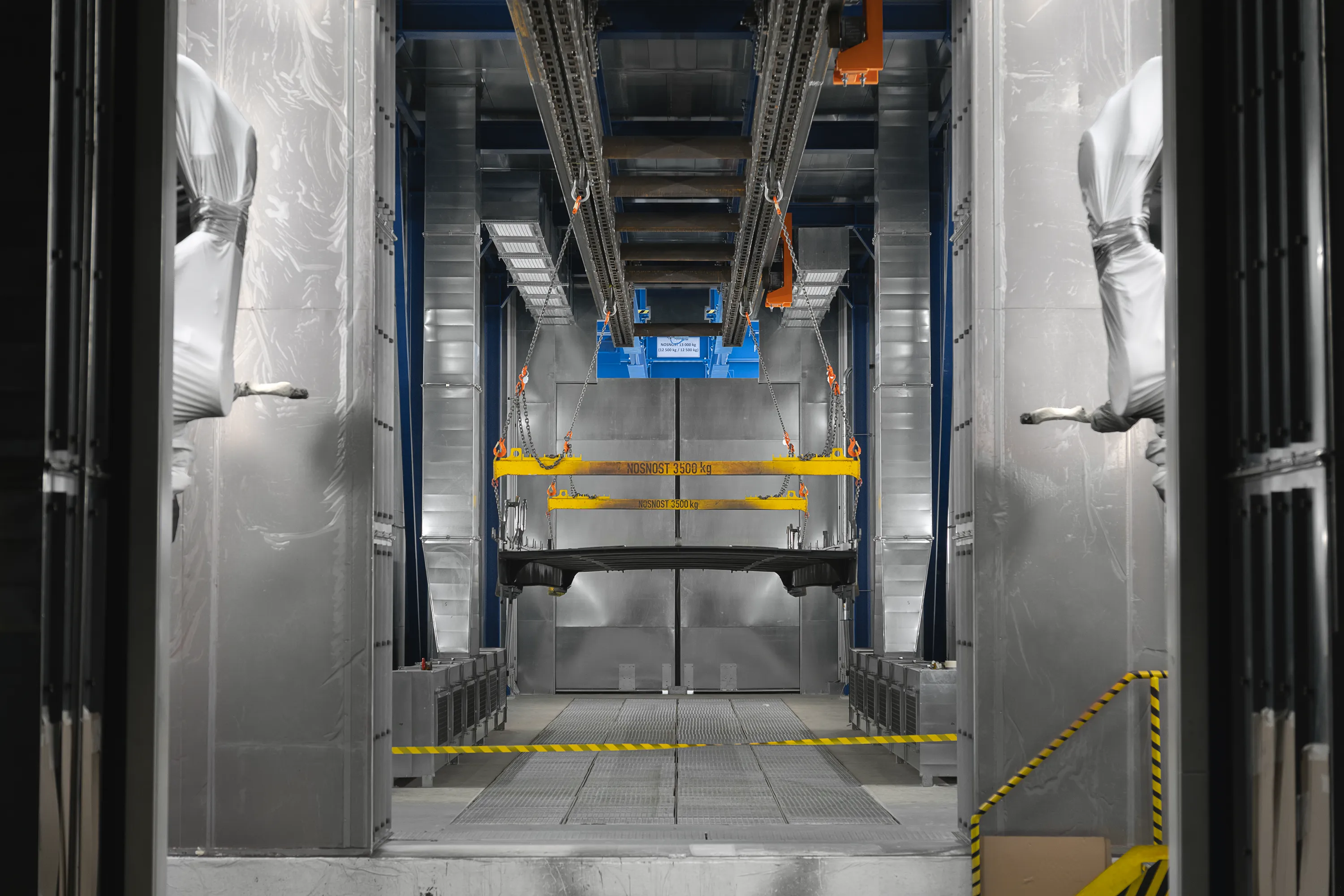
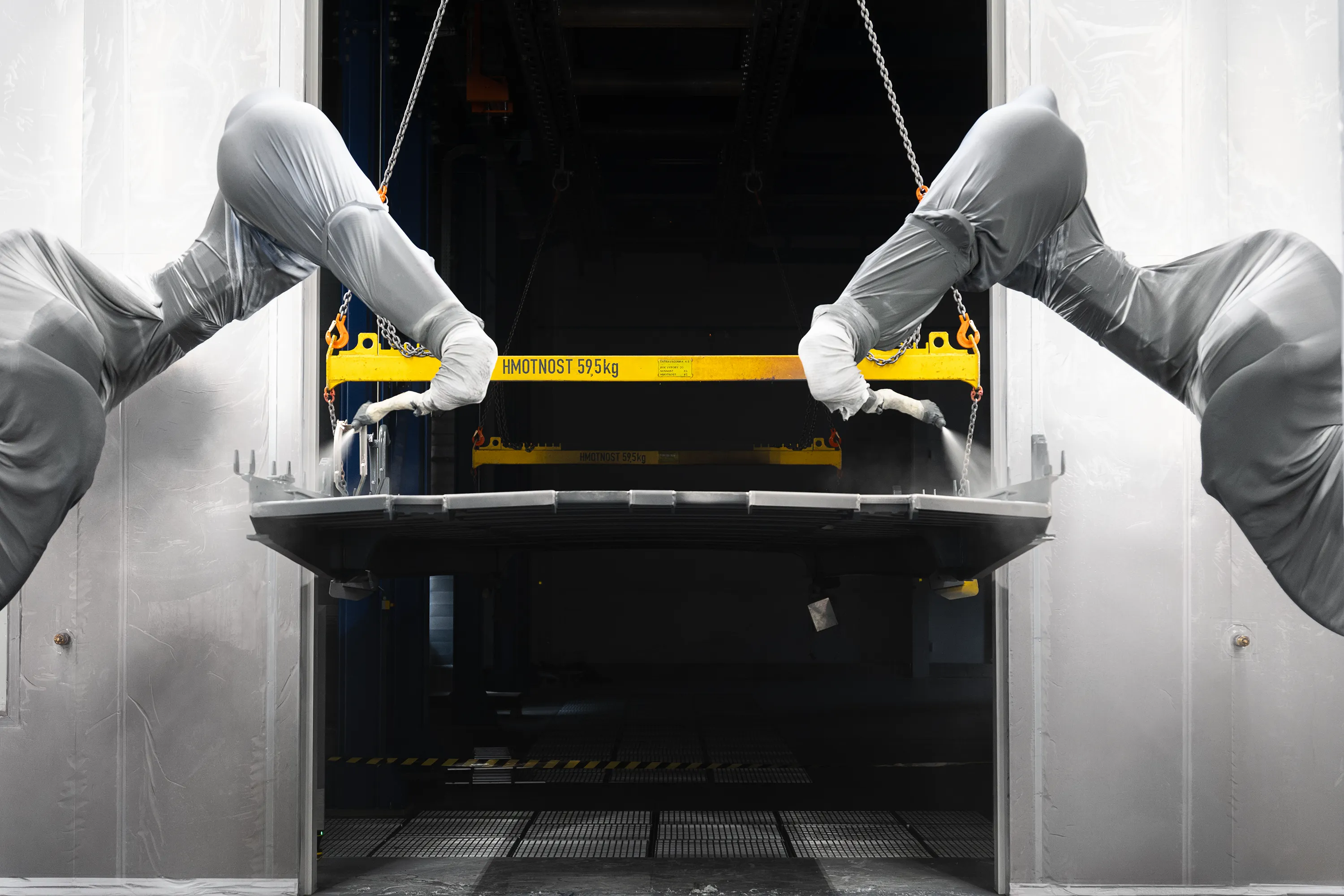
- 2x 7-axis ABB robots
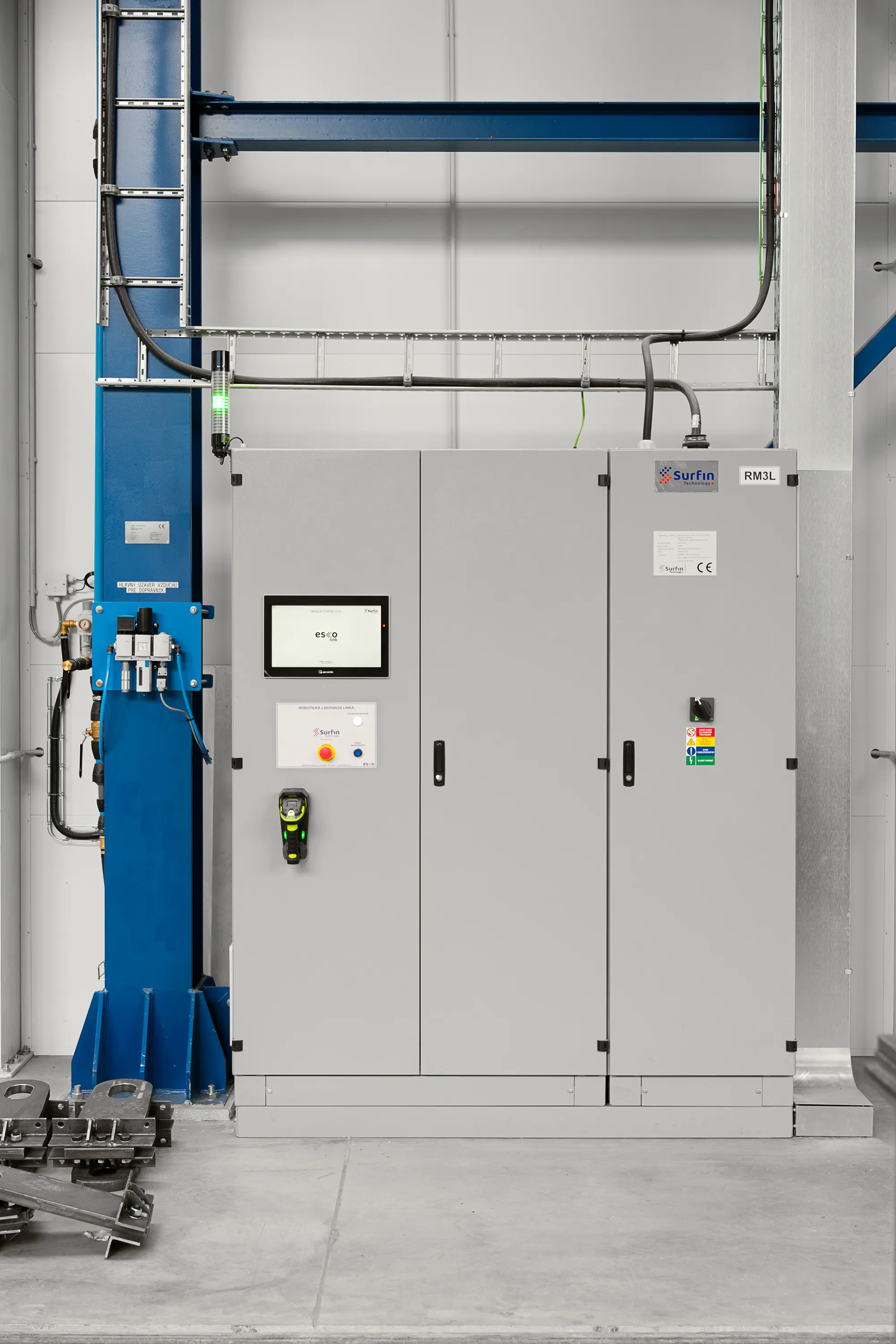
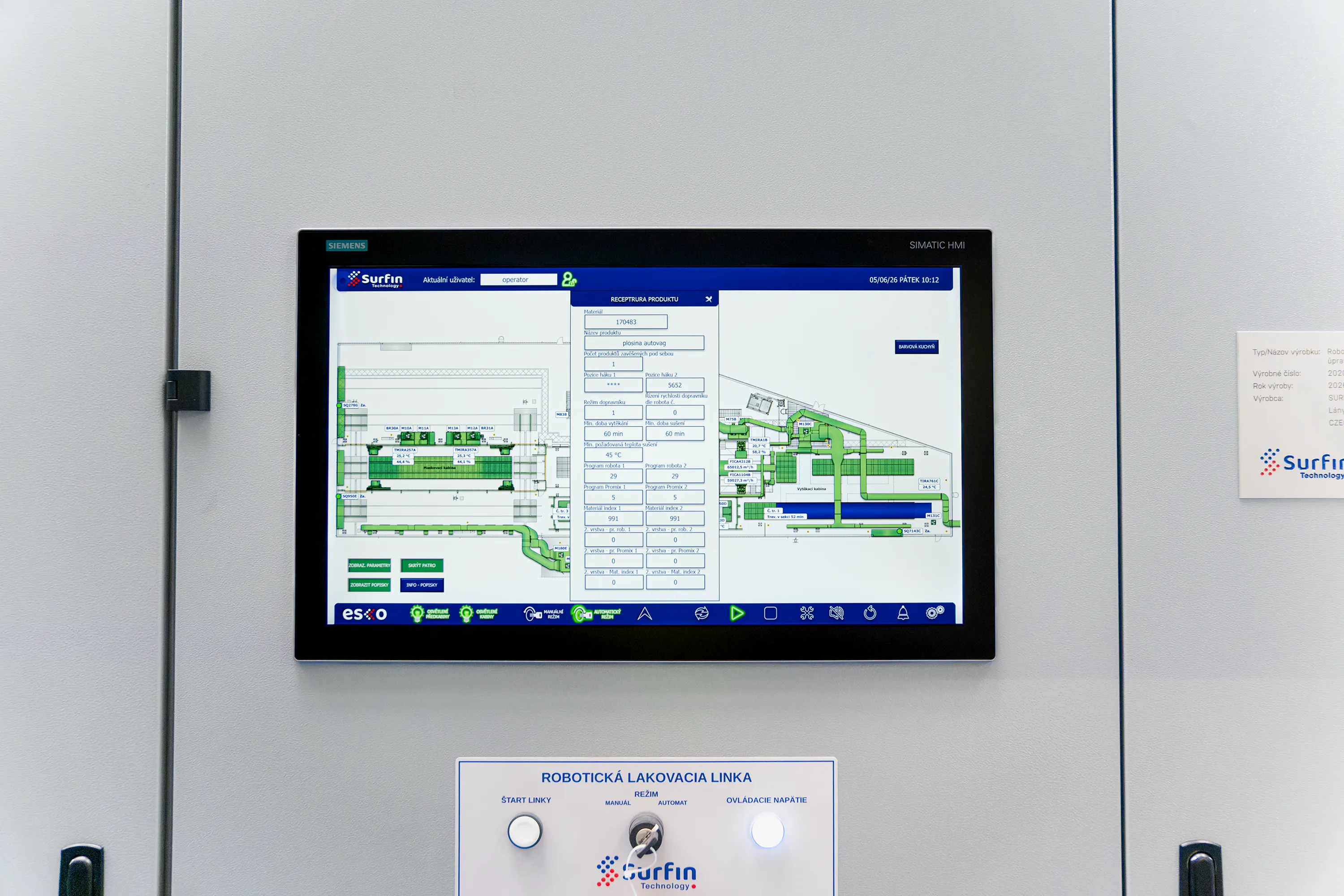
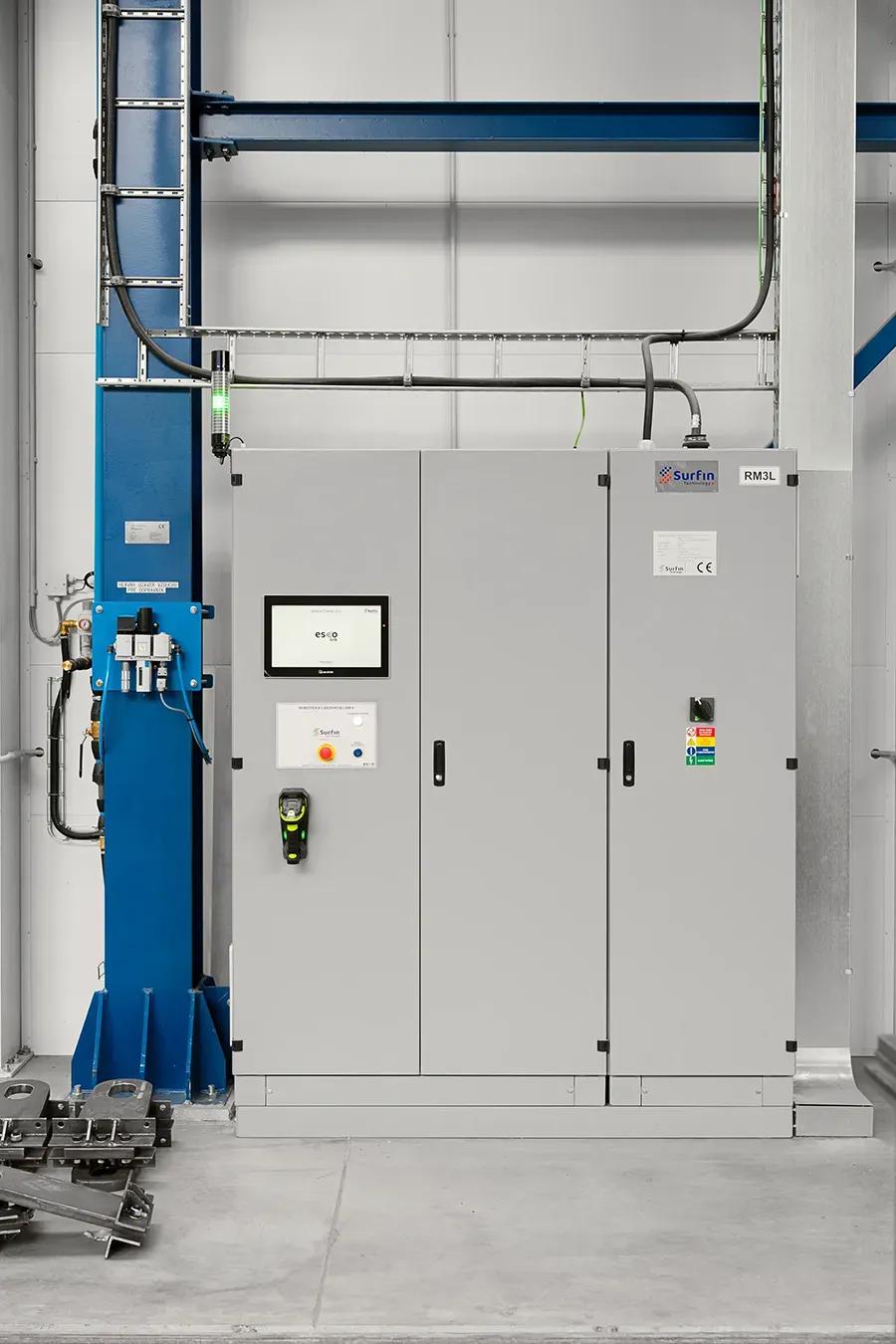
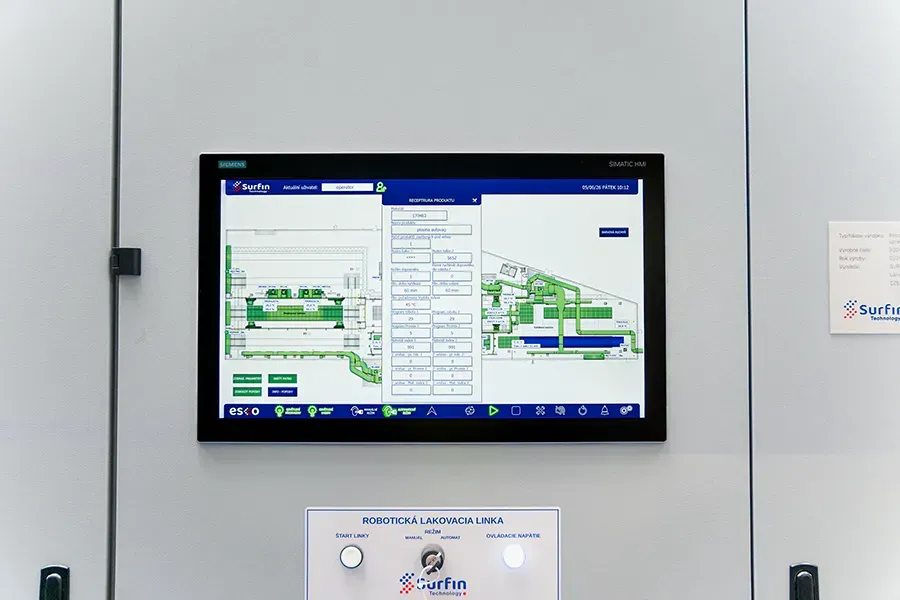
- ESCO control system
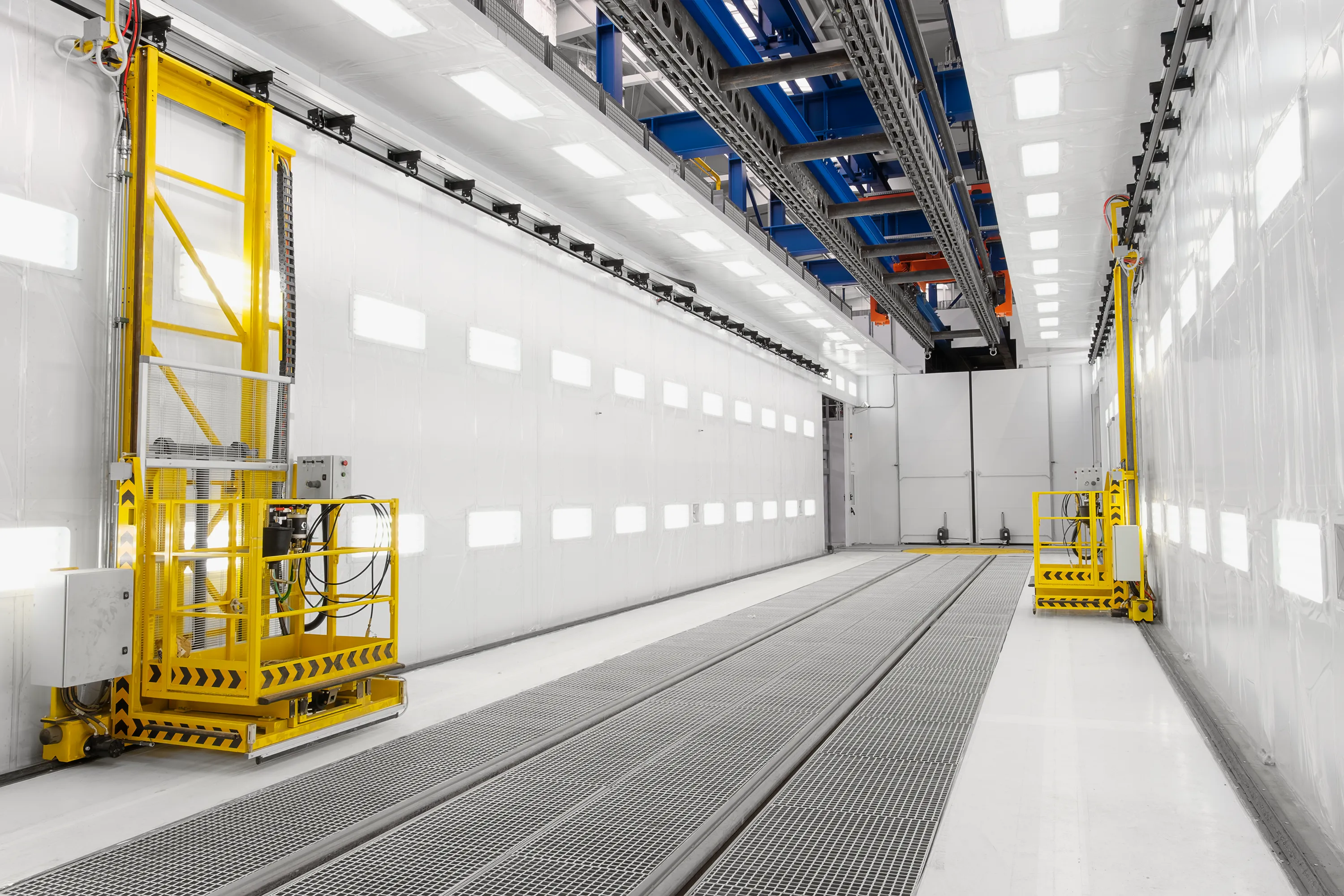
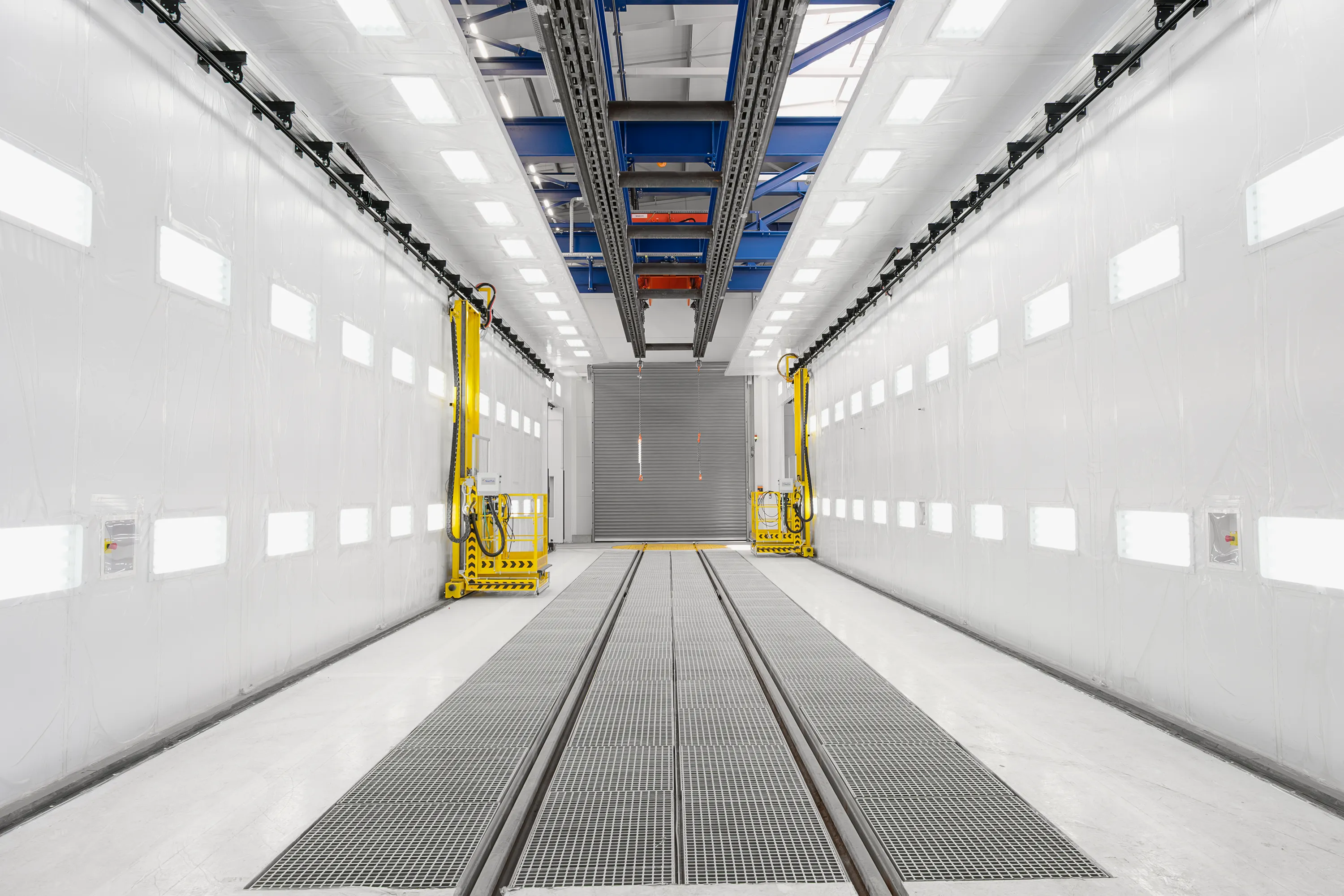
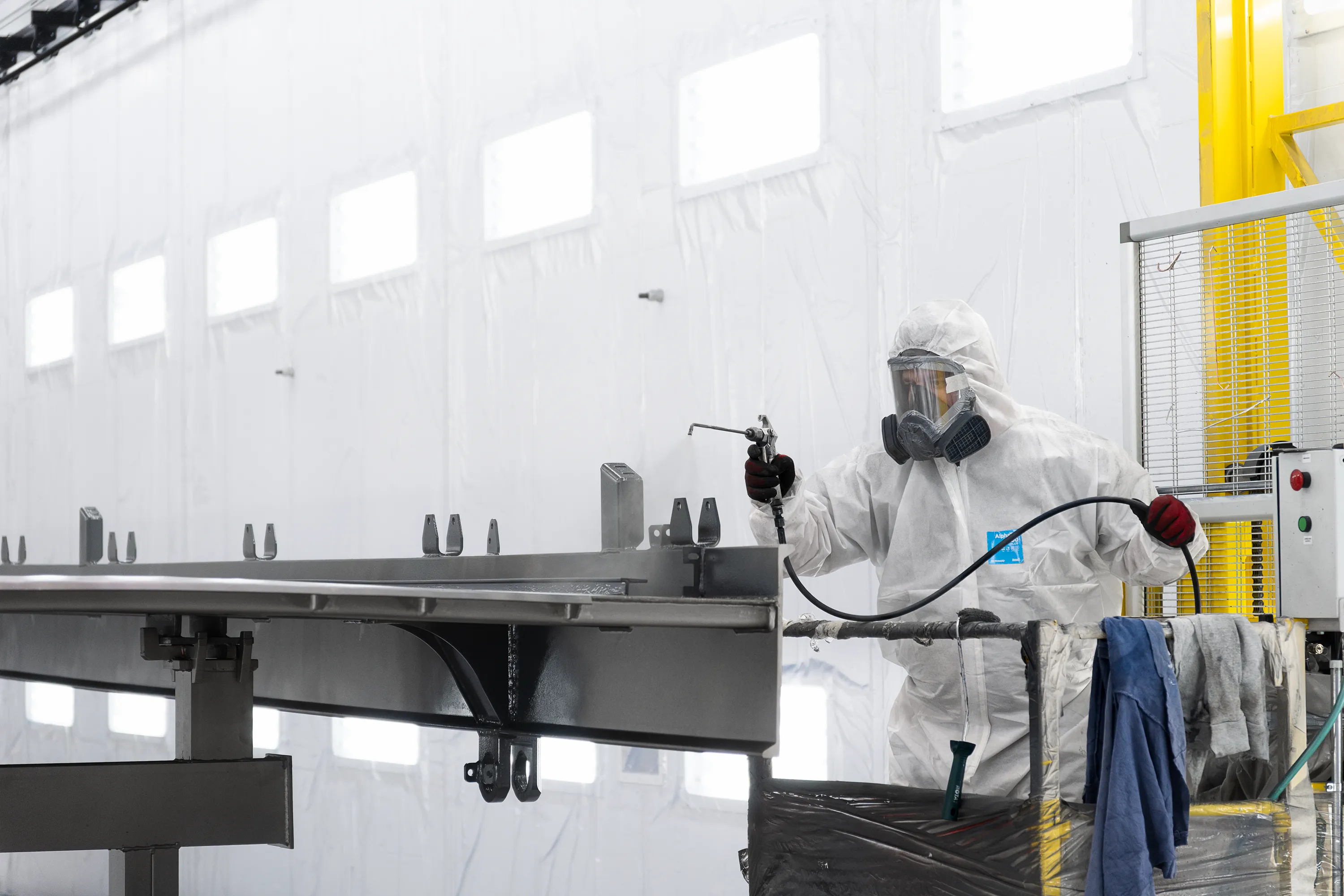
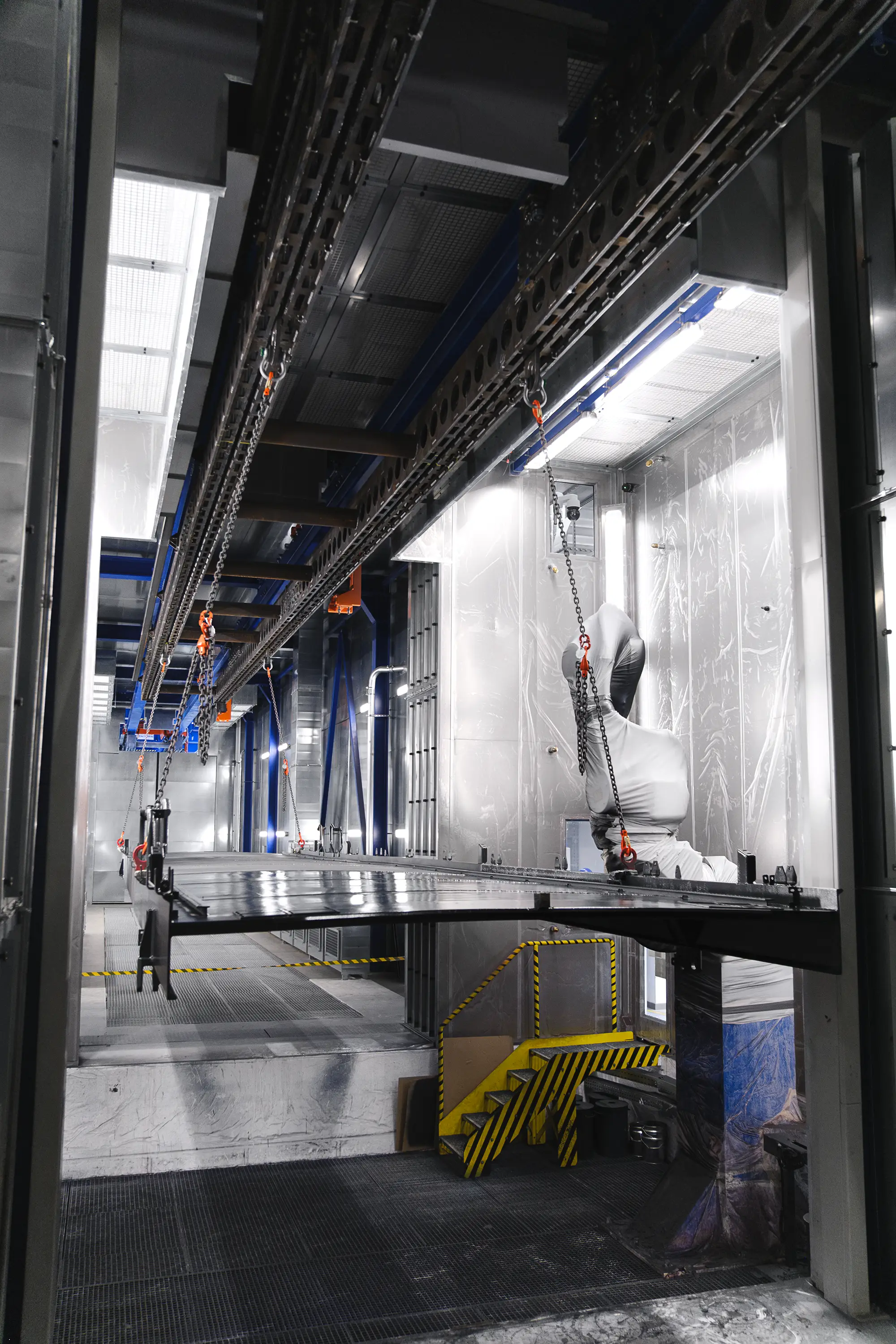
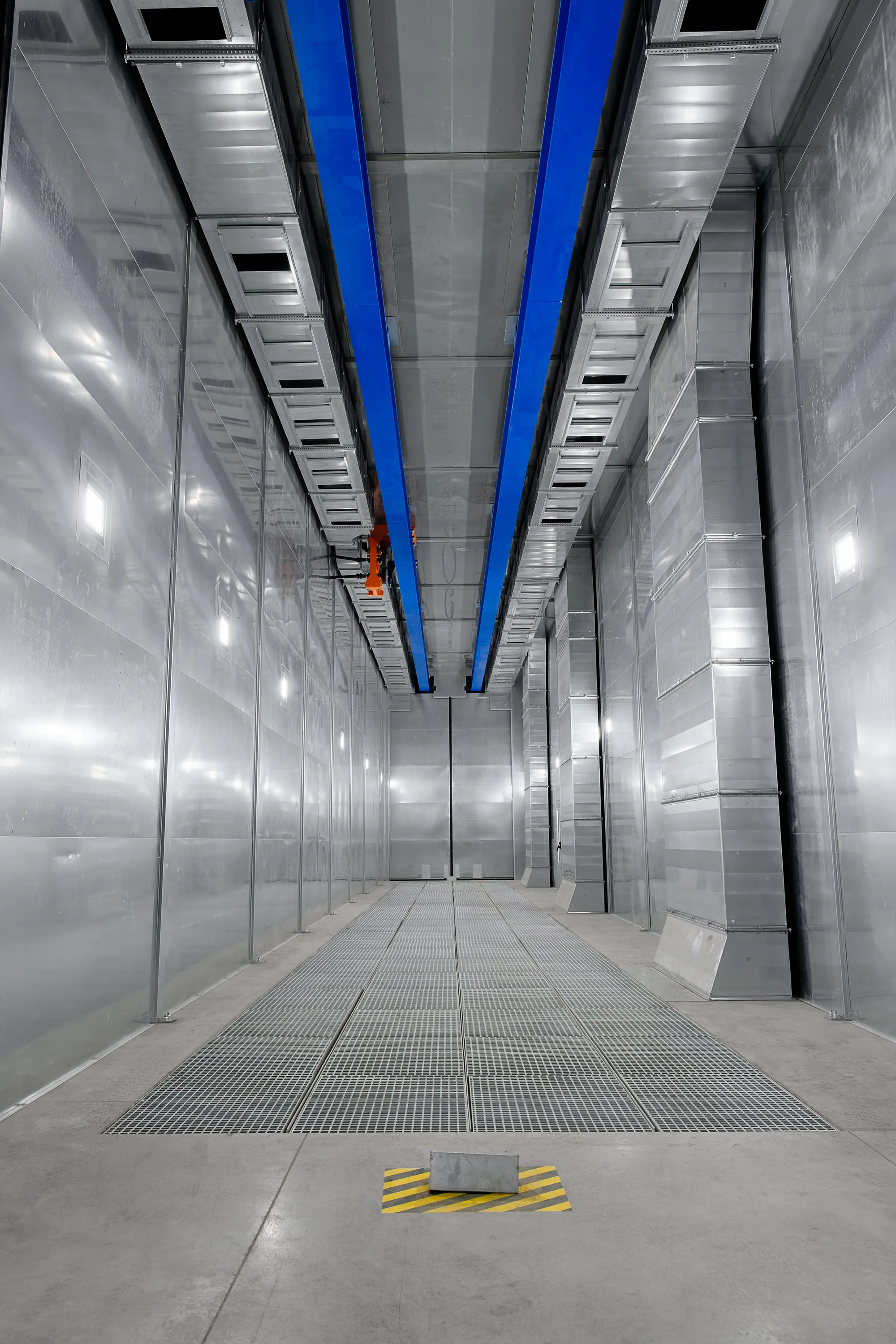
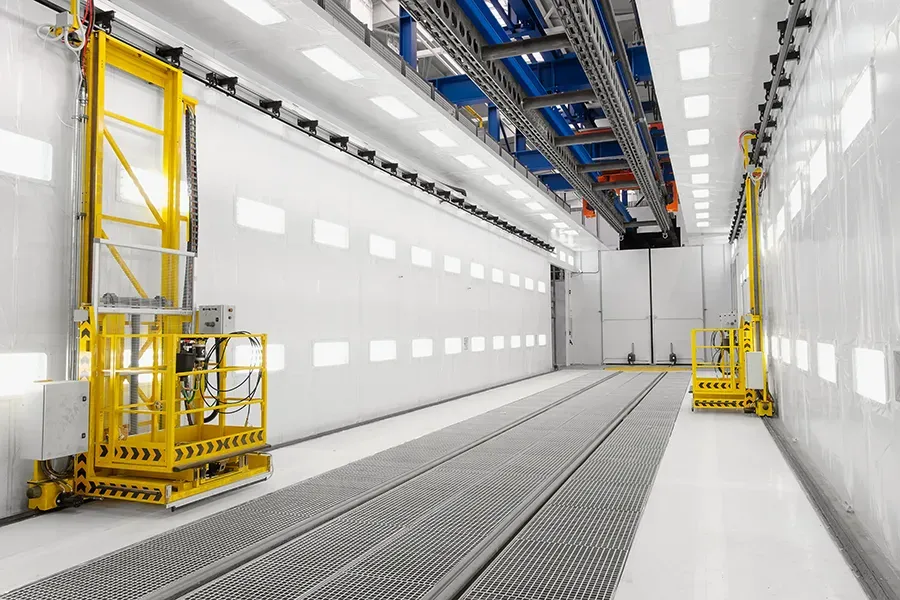
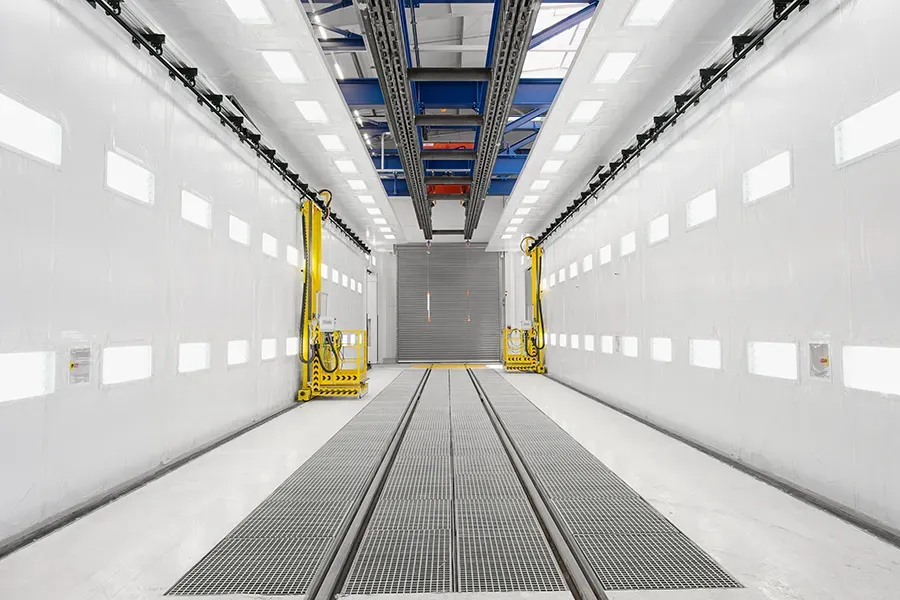
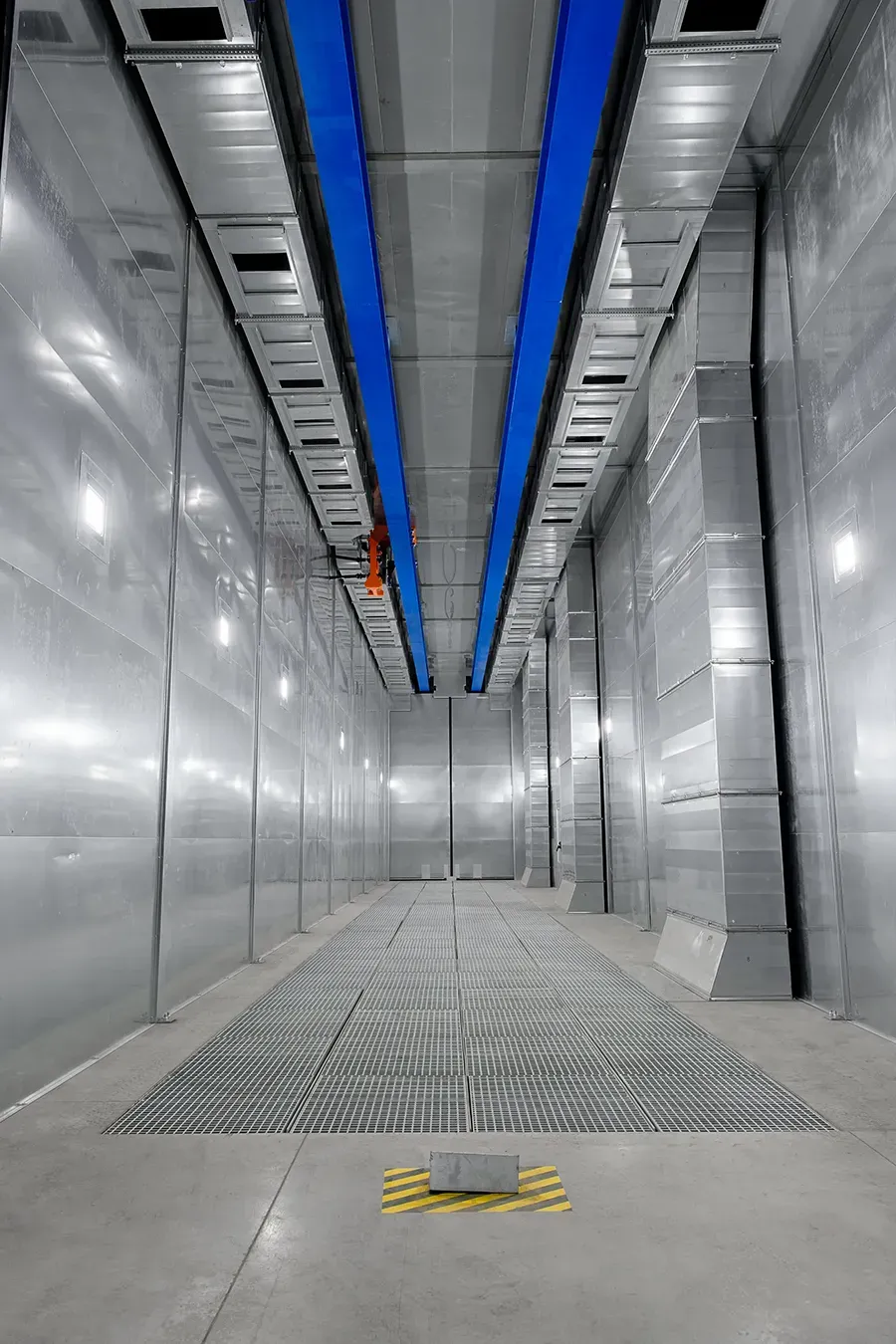
- Robotic booth
- Masking booth
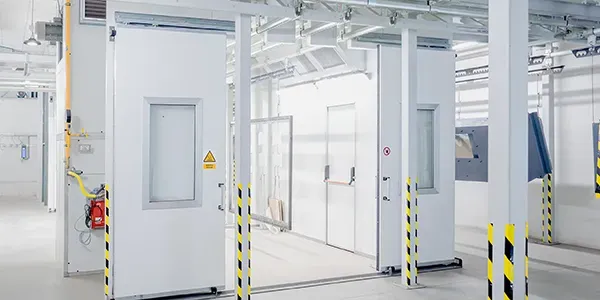
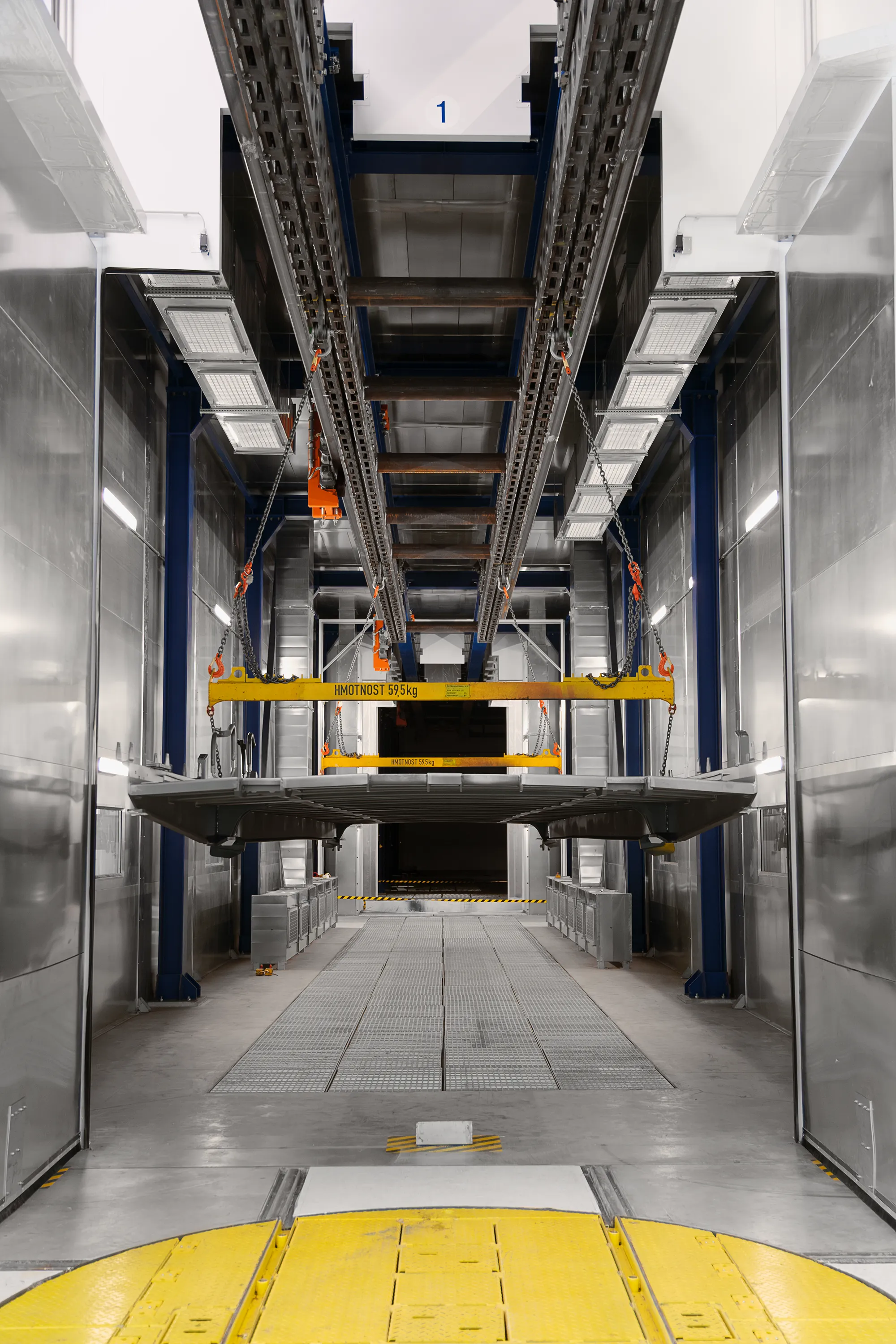
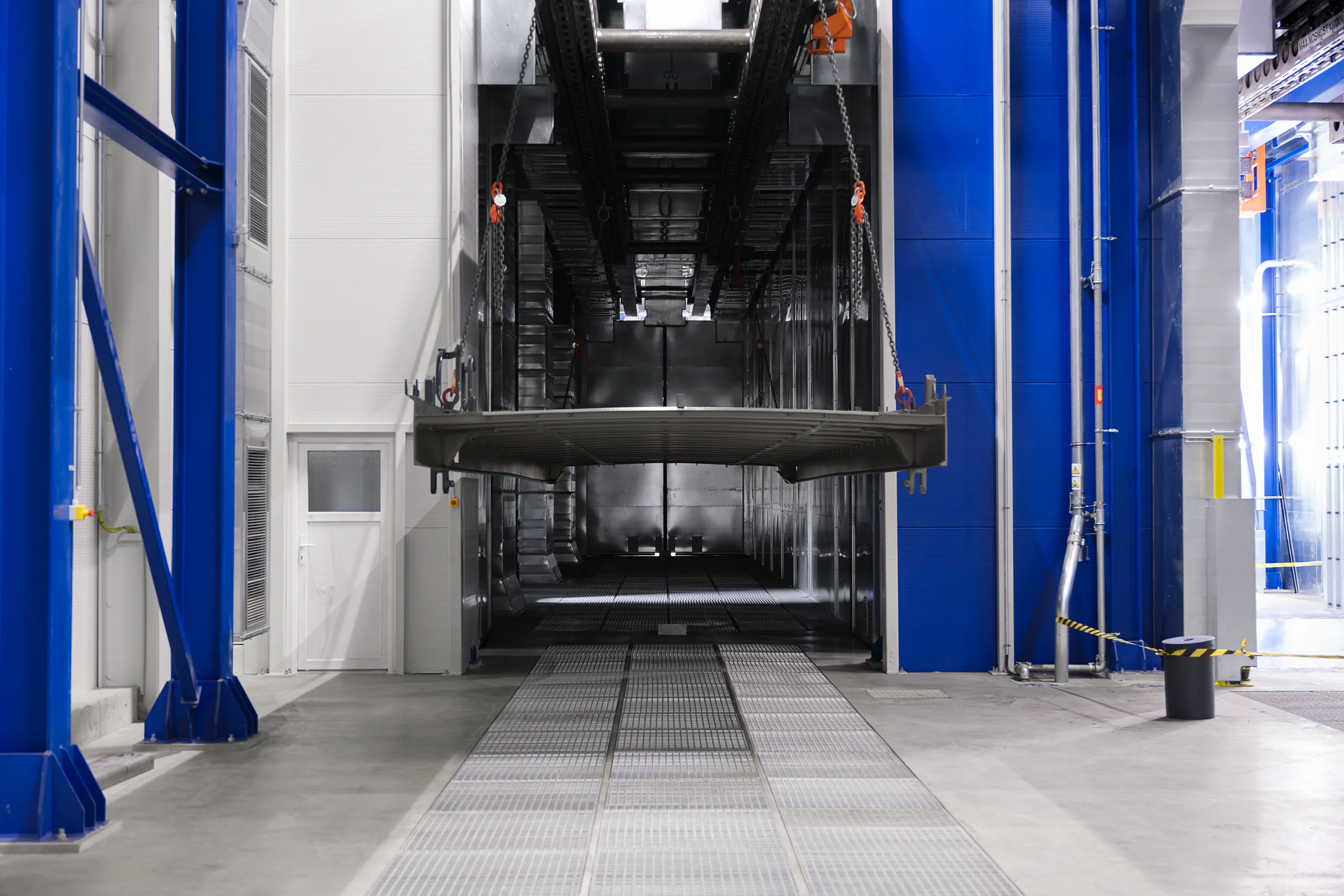
- Pass-through booth
- Drying oven
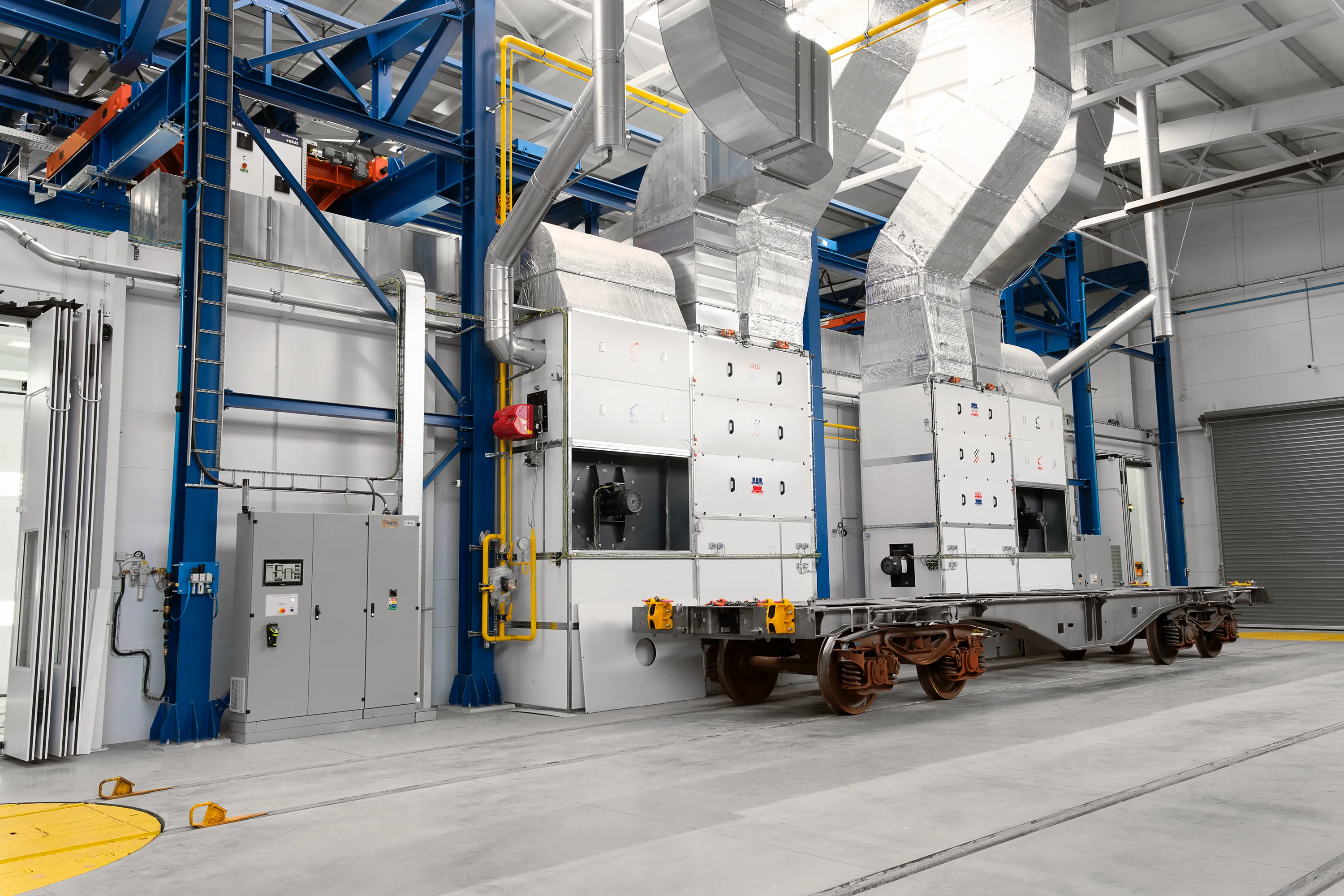
- Air-handling units
- Chiller cooling
- High-pressure extractor
- Product turntables
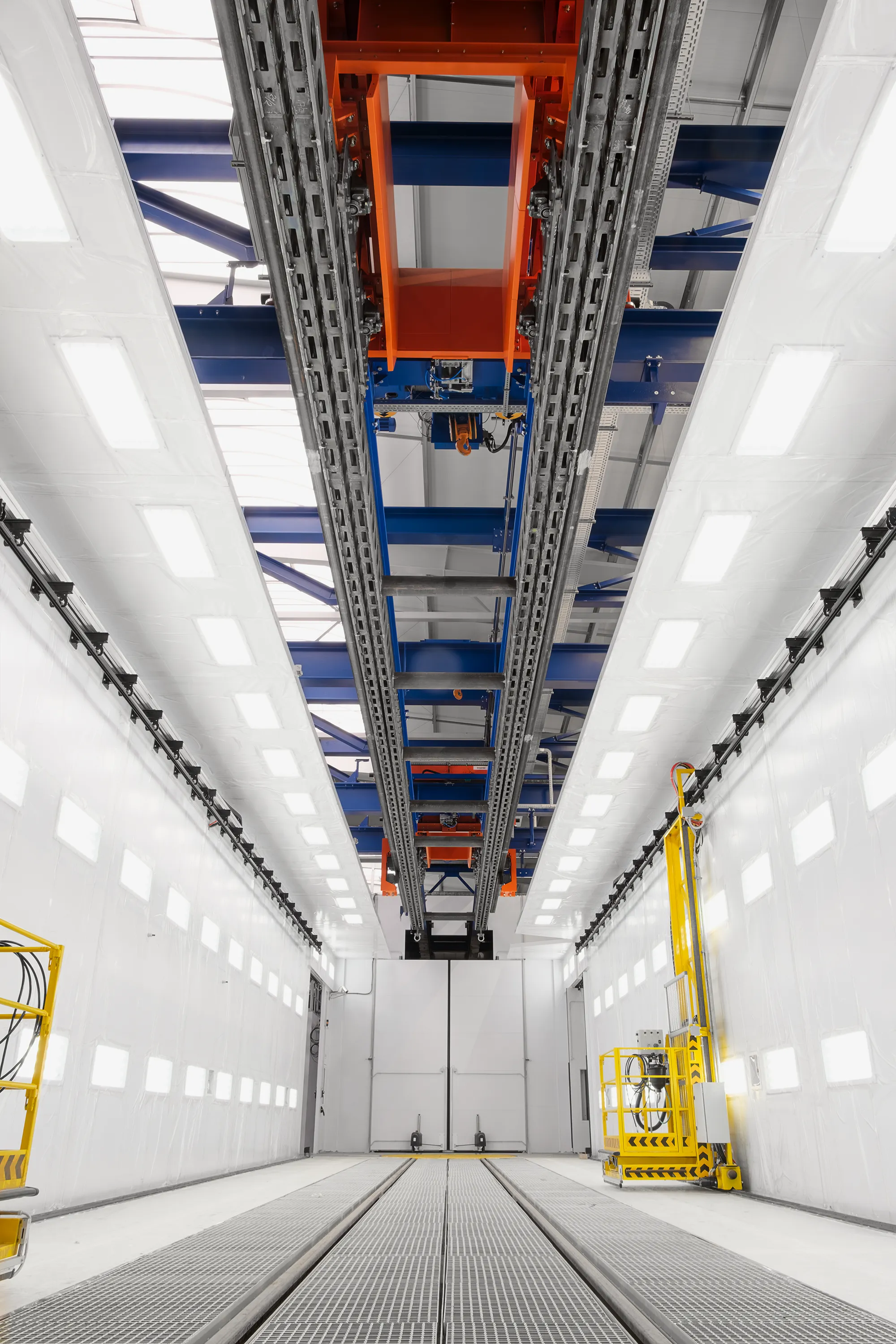
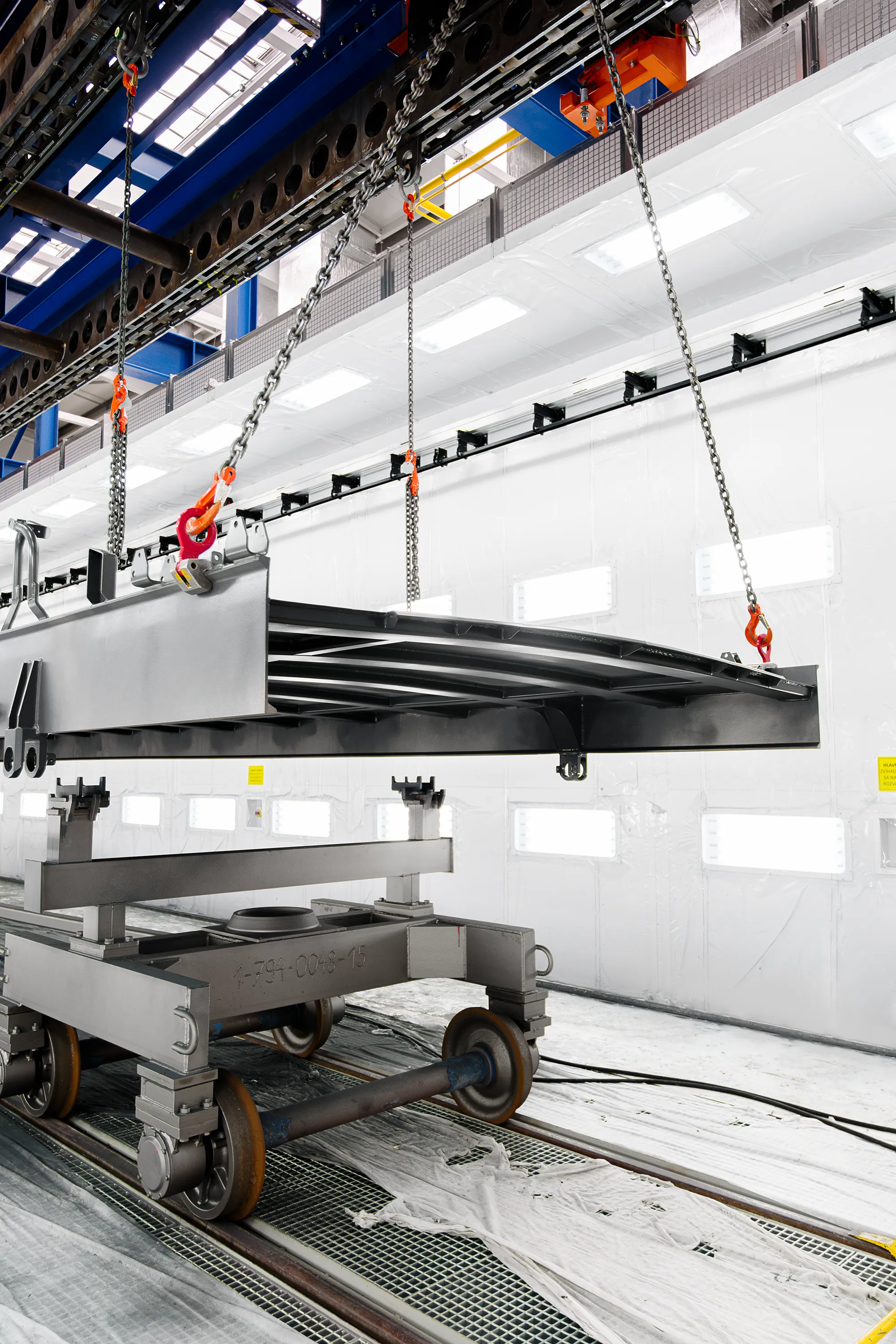
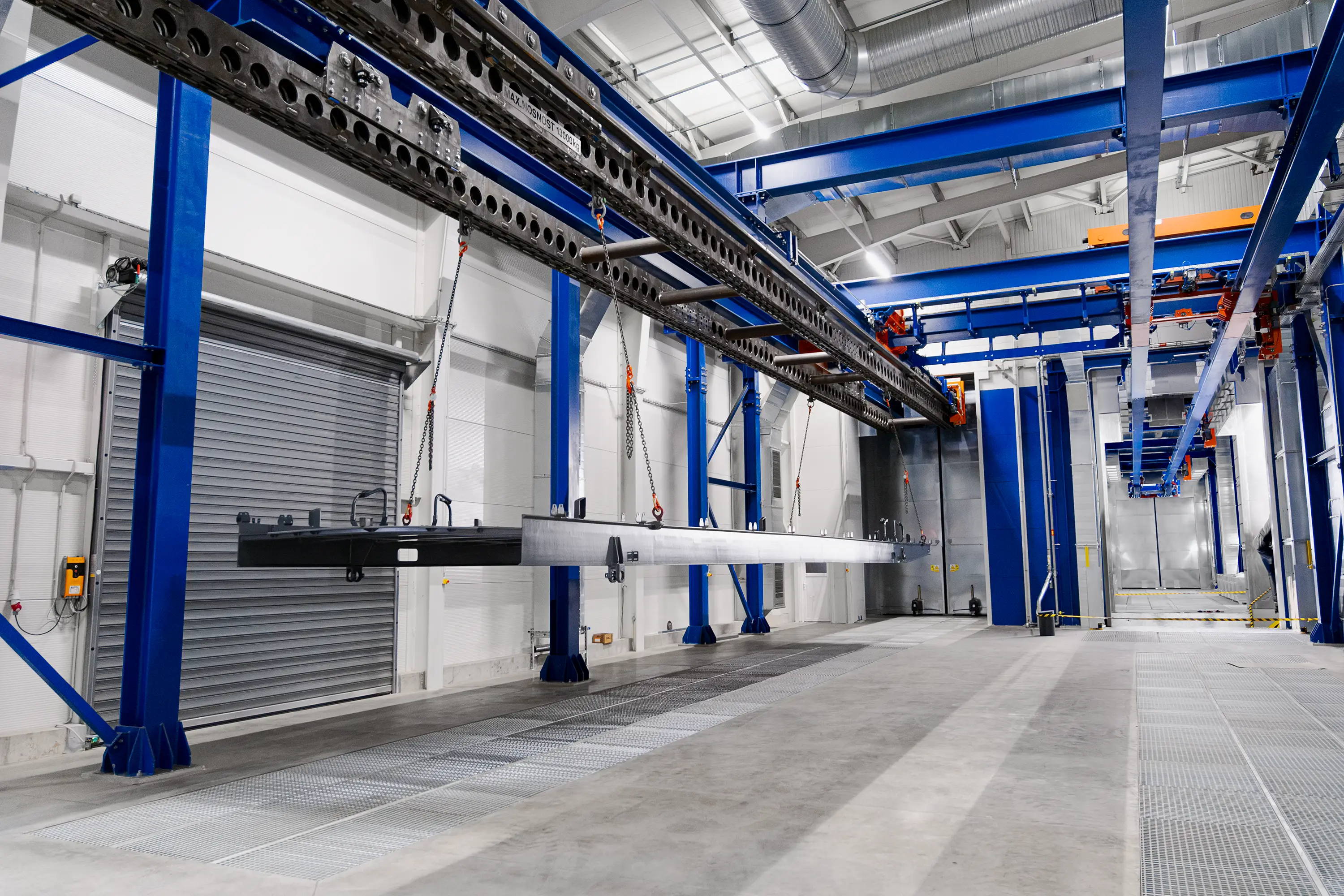
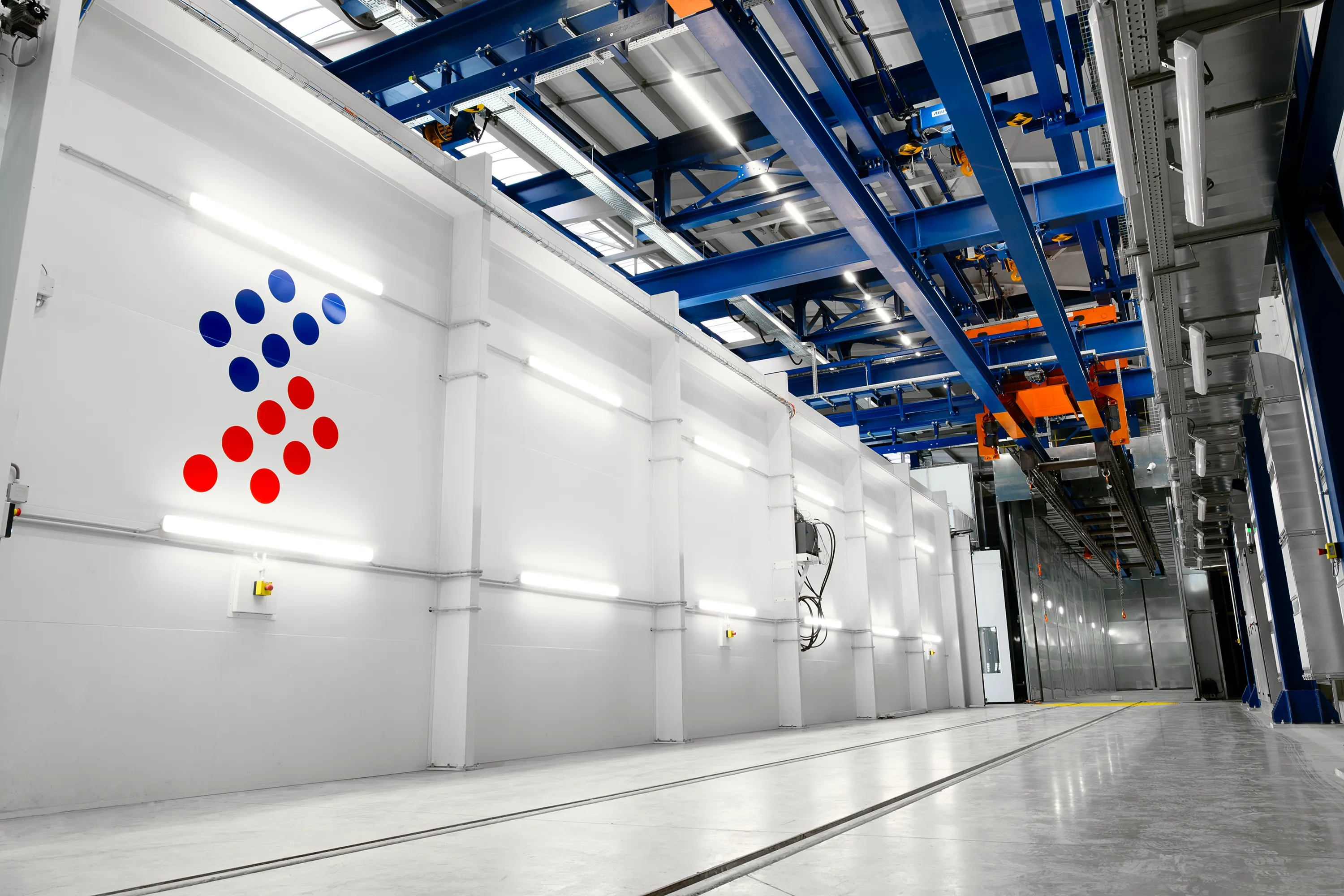
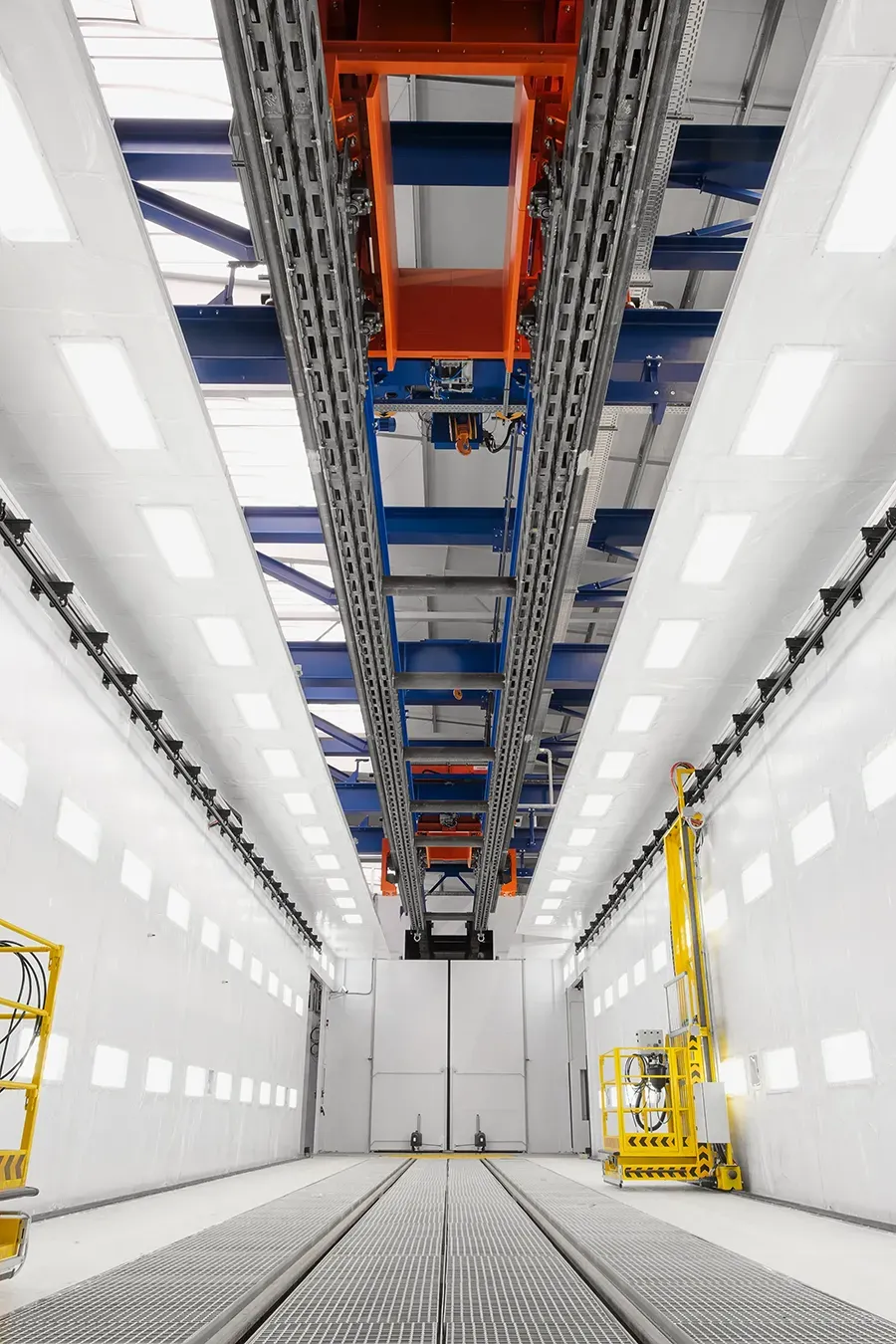
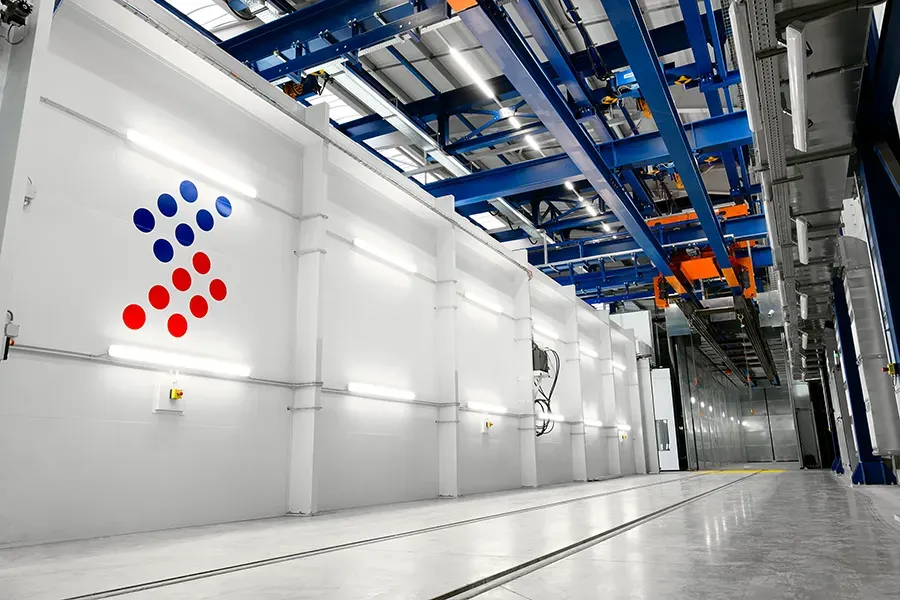
- Conveyor system
- Application and coating technology
- VOC thermal oxidiser
- CO2 fire-suppression system
- Electric high-tonnage tug
-
Client:
-
Year of implementation:
-
Location:
-
Technical specifications:
- Max Product Dimensions - L 25000 x H 4000 x W 3200 mm
- Max Product Weight - 13000 kg
- Avg. line cycle by wagon type - 1 wagon per hour
- 2x 7-axis ABB robots
- ESCO control system
- Robotic booth
- Masking booth
- Pass-through booth
- Drying oven
- Air-handling units
- Chiller cooling
- High-pressure extractor
- Product turntables
- Conveyor system
- Application and coating technology
- VOC thermal oxidiser
- CO2 fire-suppression system
- Electric high-tonnage tug
Technical Description of the Implementation
Robotic coating cut consumption and doubled production speed
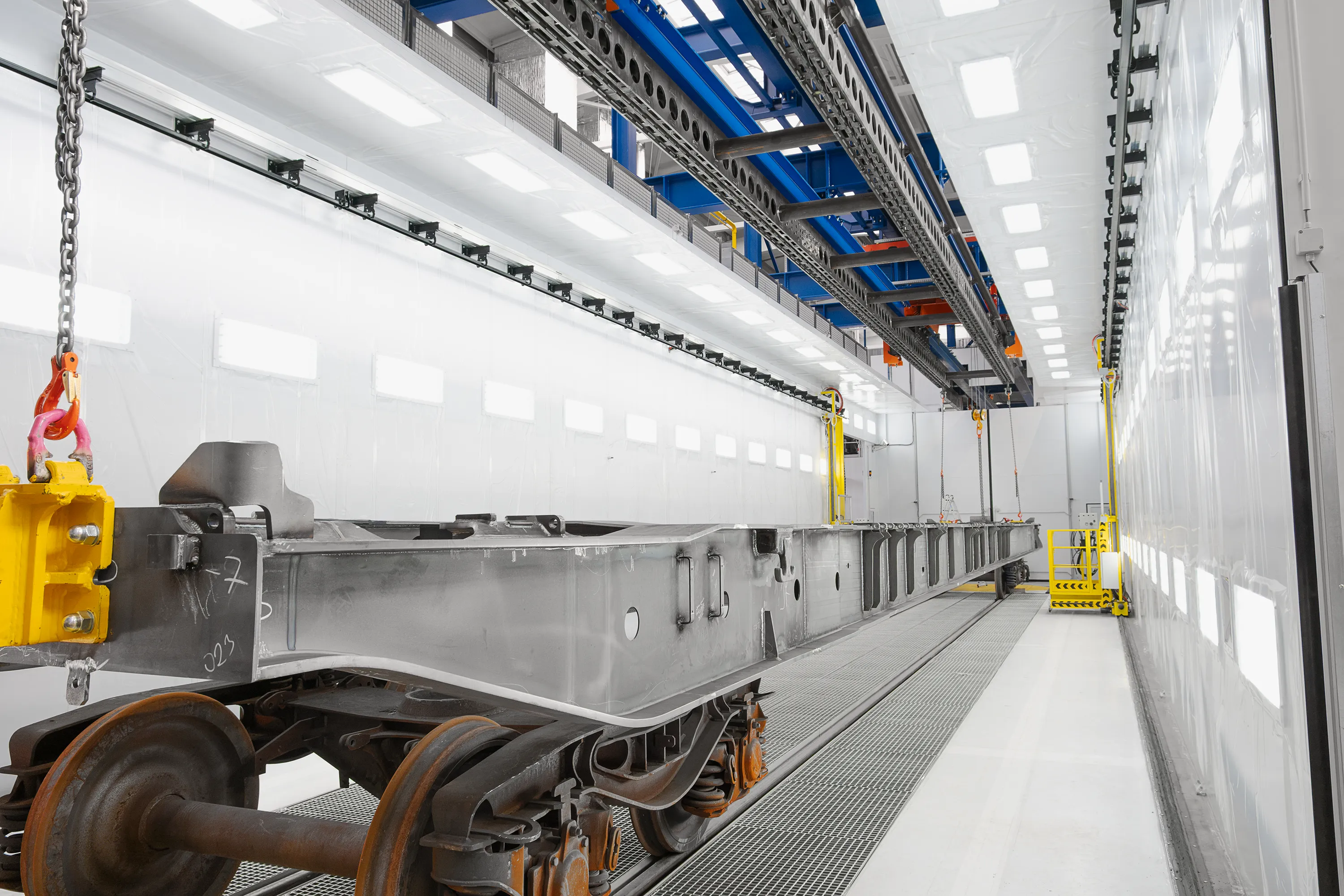
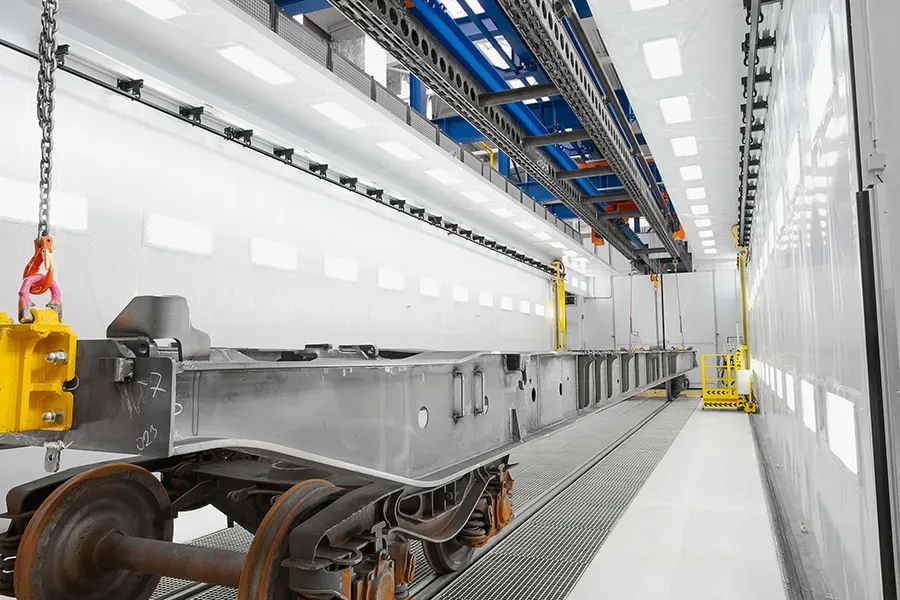
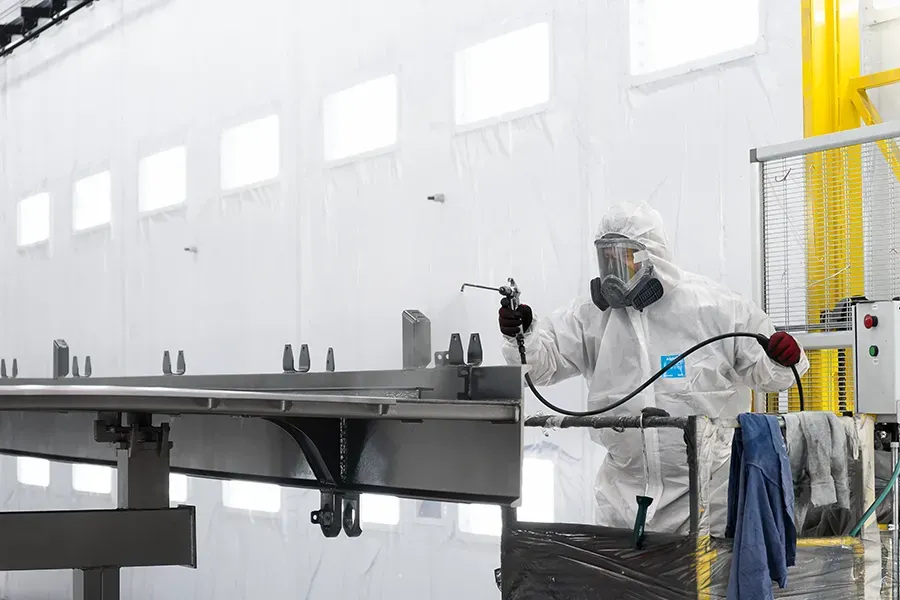
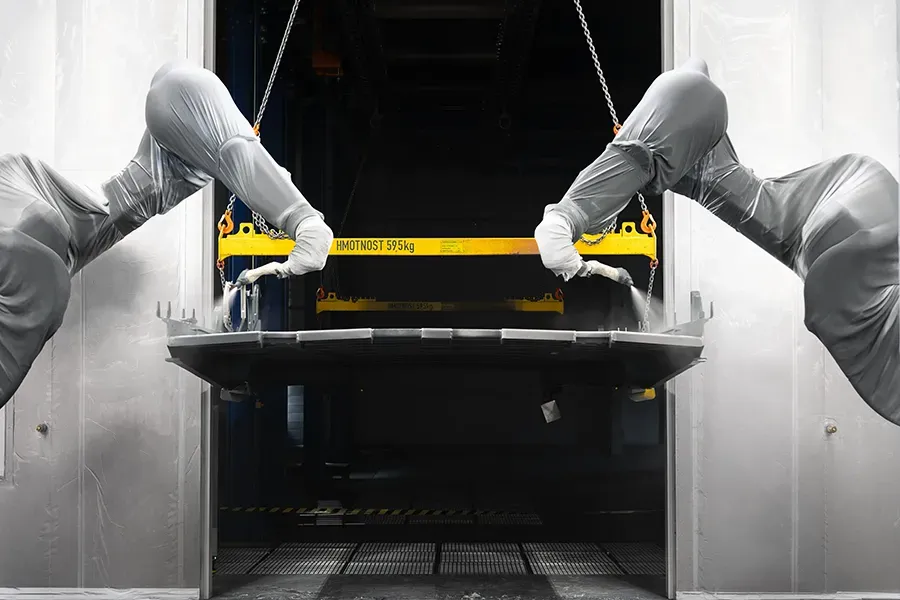
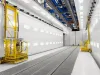
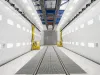
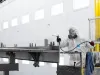
Freight wagons up to 25 metres long and weighing up to 13 tonnes. These are exactly the kind of parts coated at Tatravagónka a.s. Poprad, one of the largest wagon manufacturers in Europe. The manual coating of freight wagons meant significant losses of both time and material for the company. Faster coating, optimised paint consumption, and a more efficient surface-treatment process overall — these were the exact requirements the company came to us with. There was only one solution: replacing the existing process with an integrated automatic line. Thanks to the new coating line and the use of modern coating systems, under favourable conditions we can reduce paint consumption and coating time by up to 50% compared to the previous process.
Robotic coating raised efficiency, speed, and quality
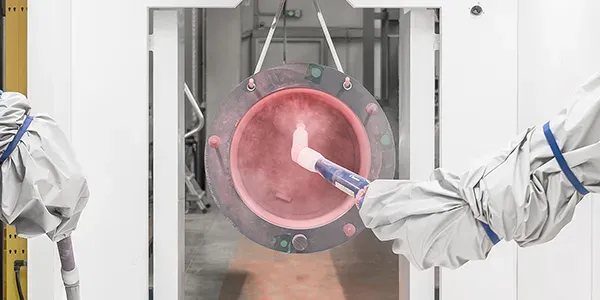
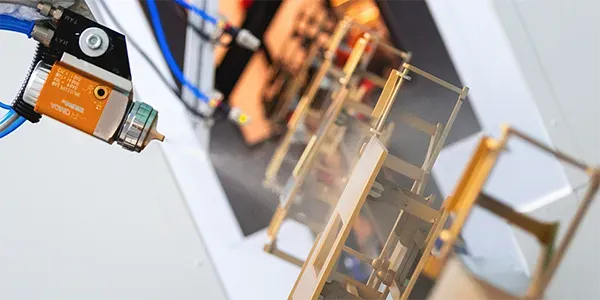
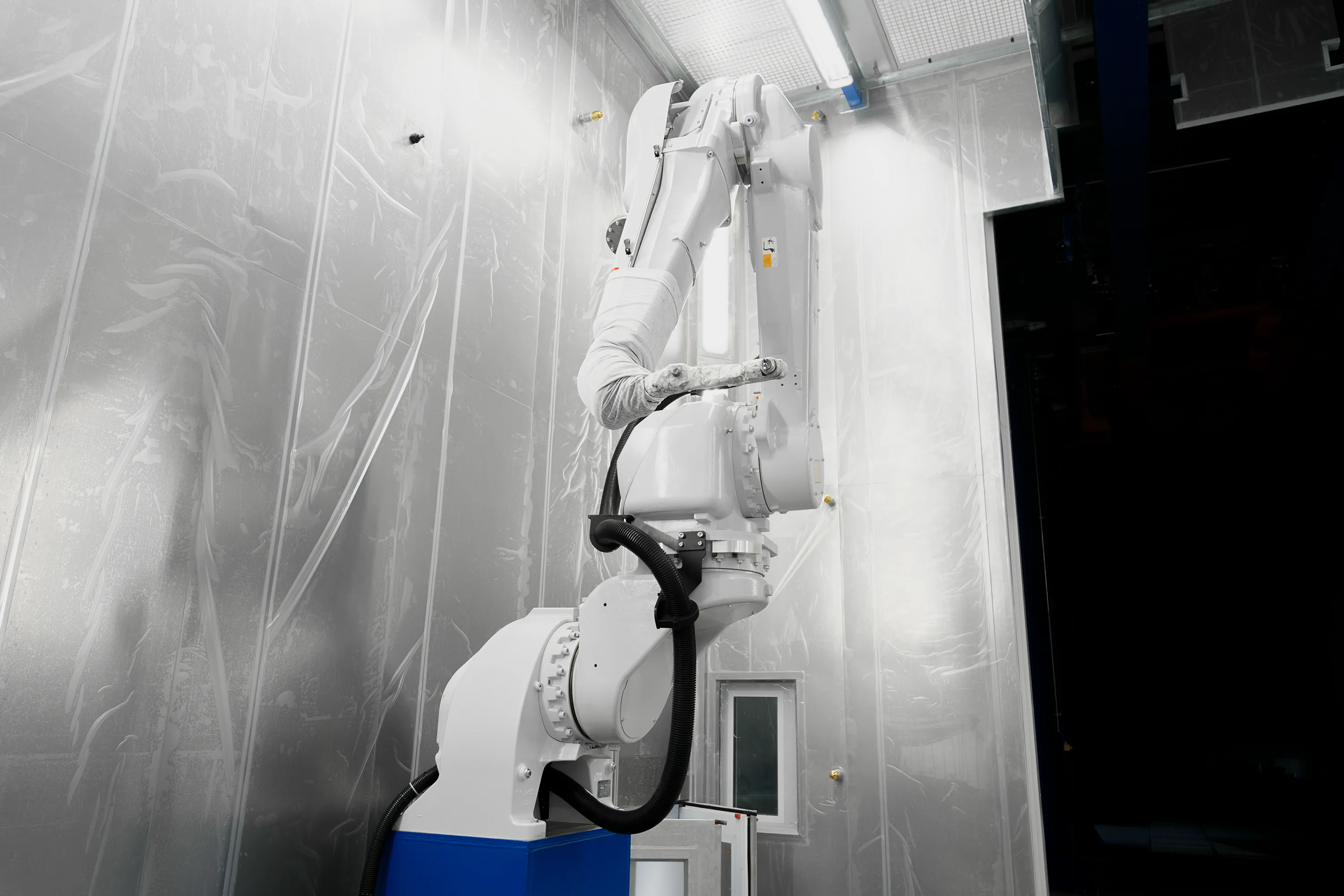
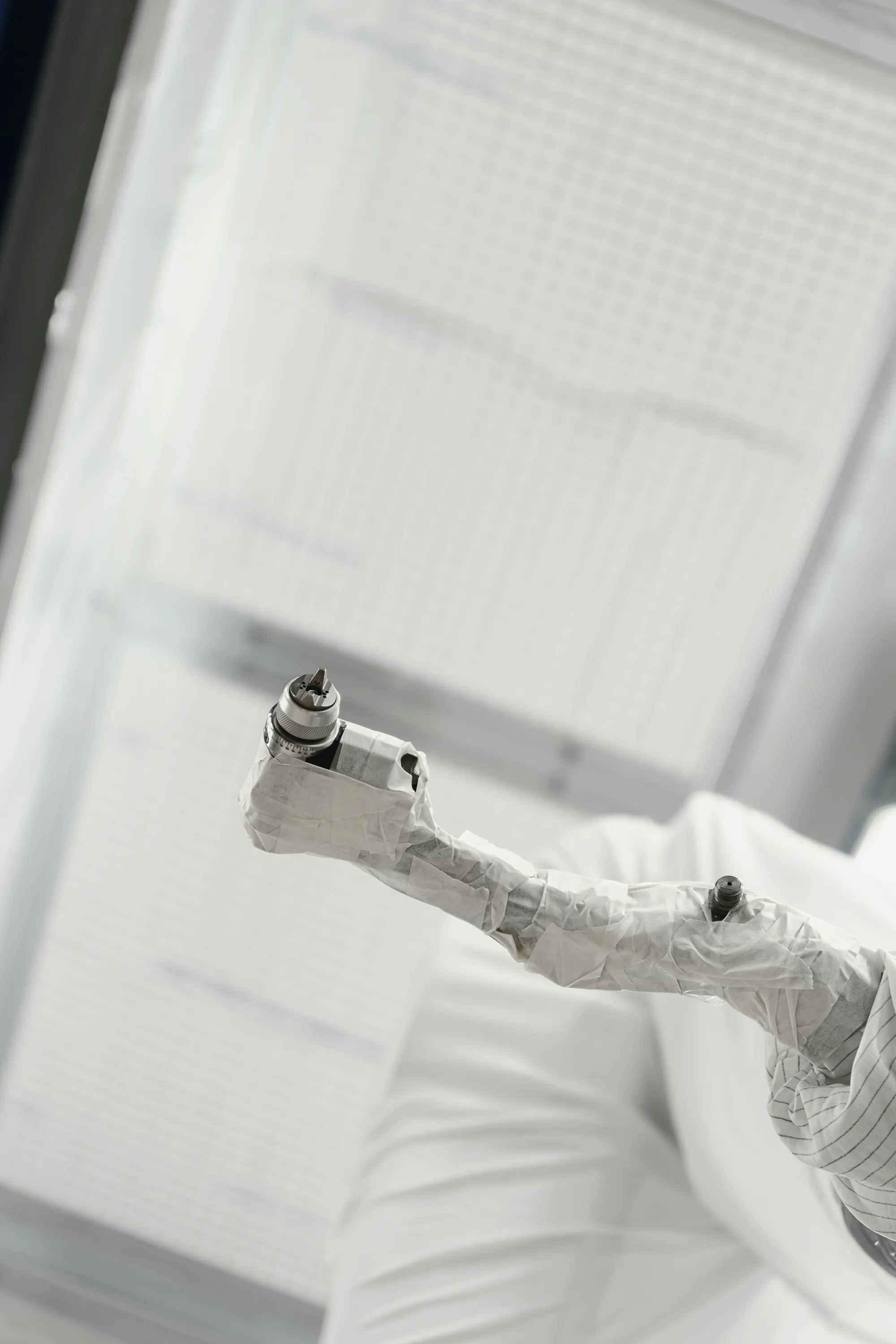
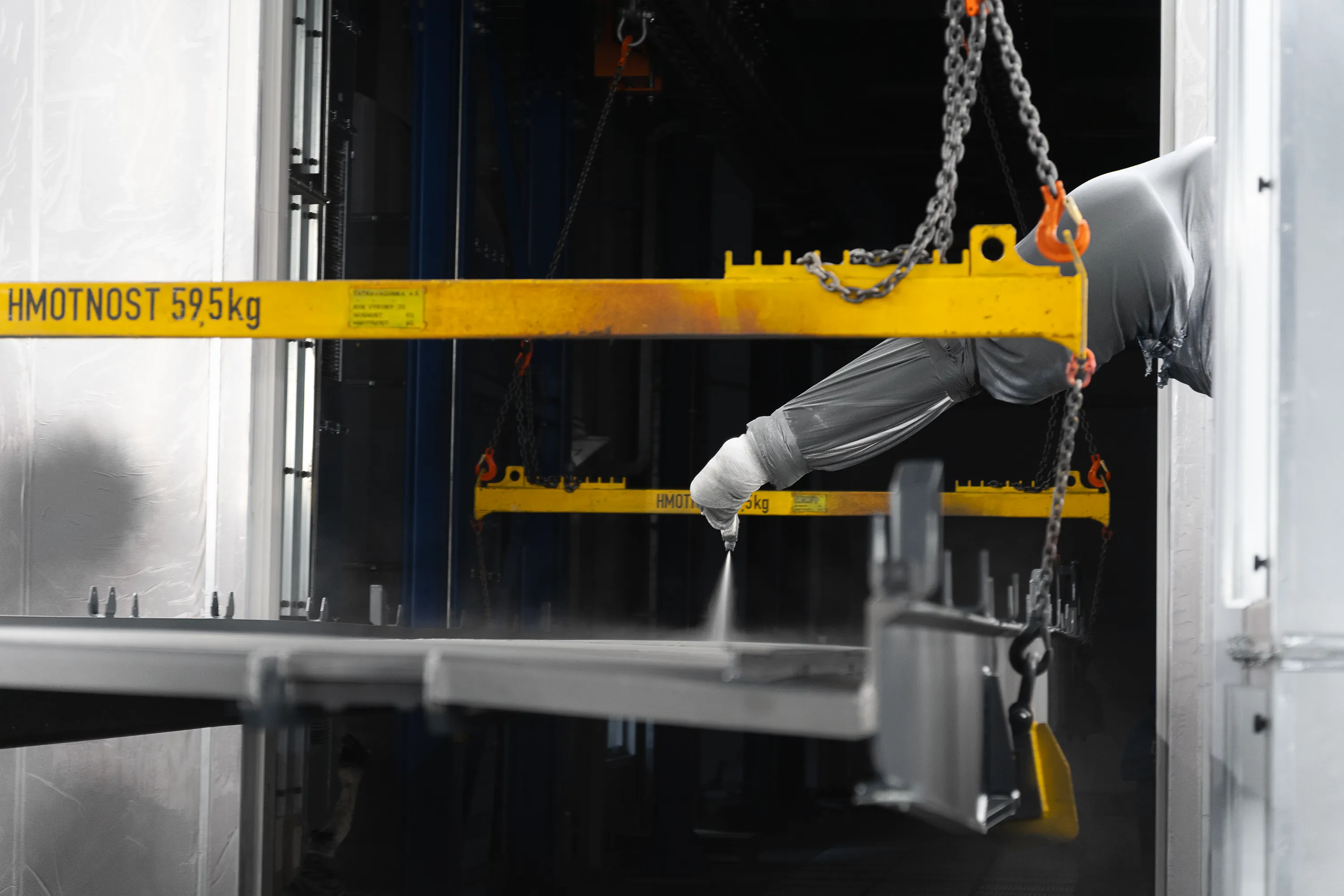
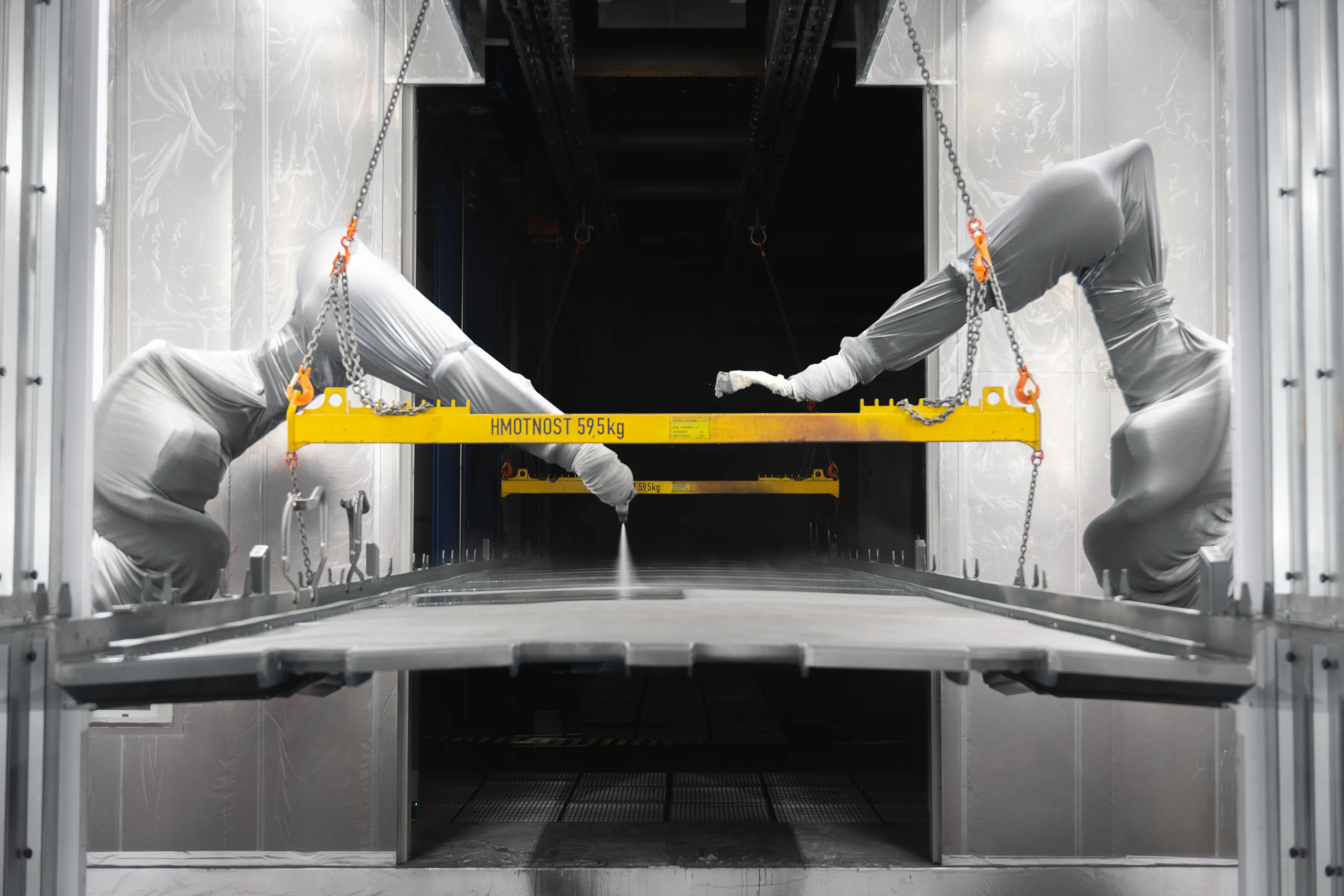
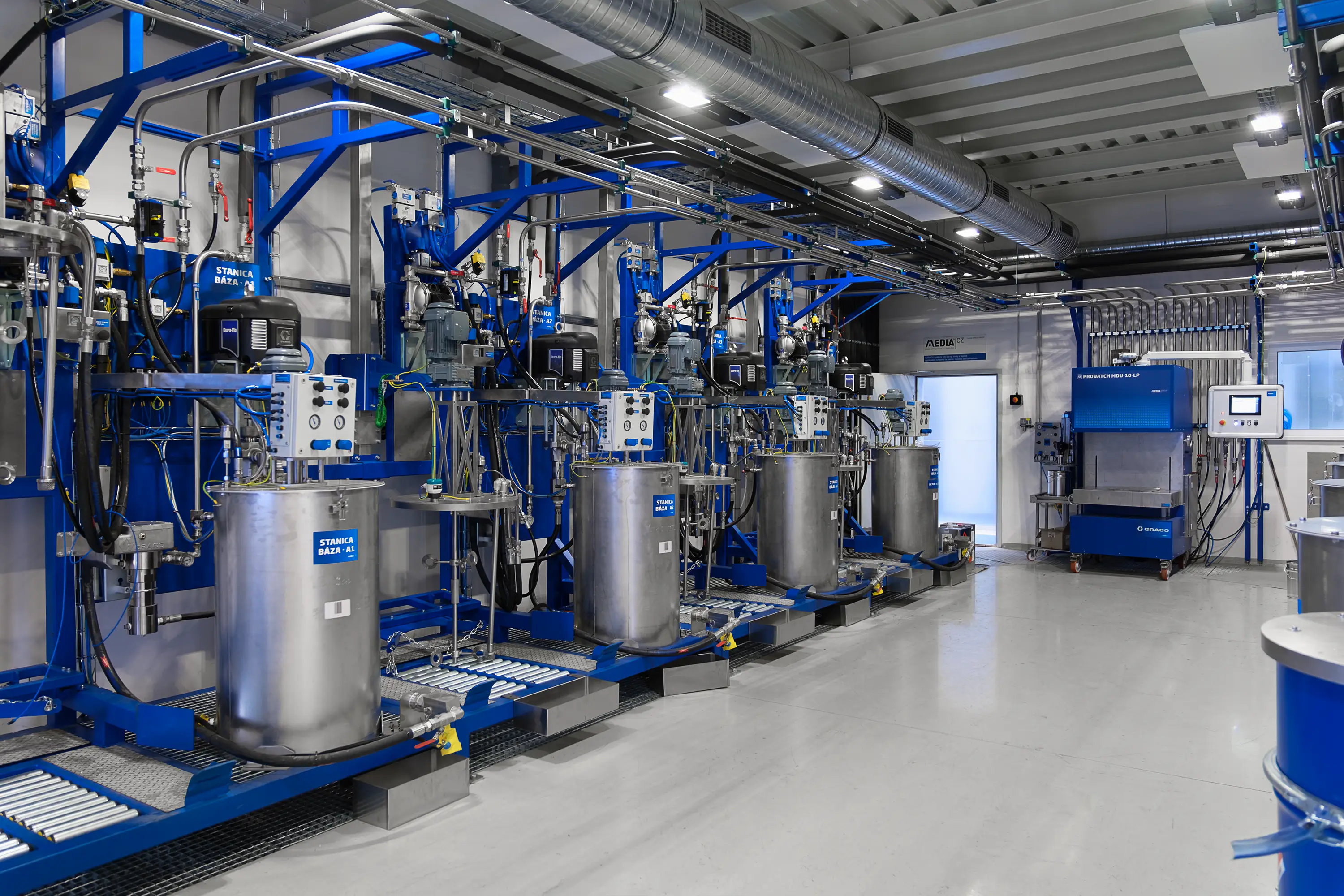
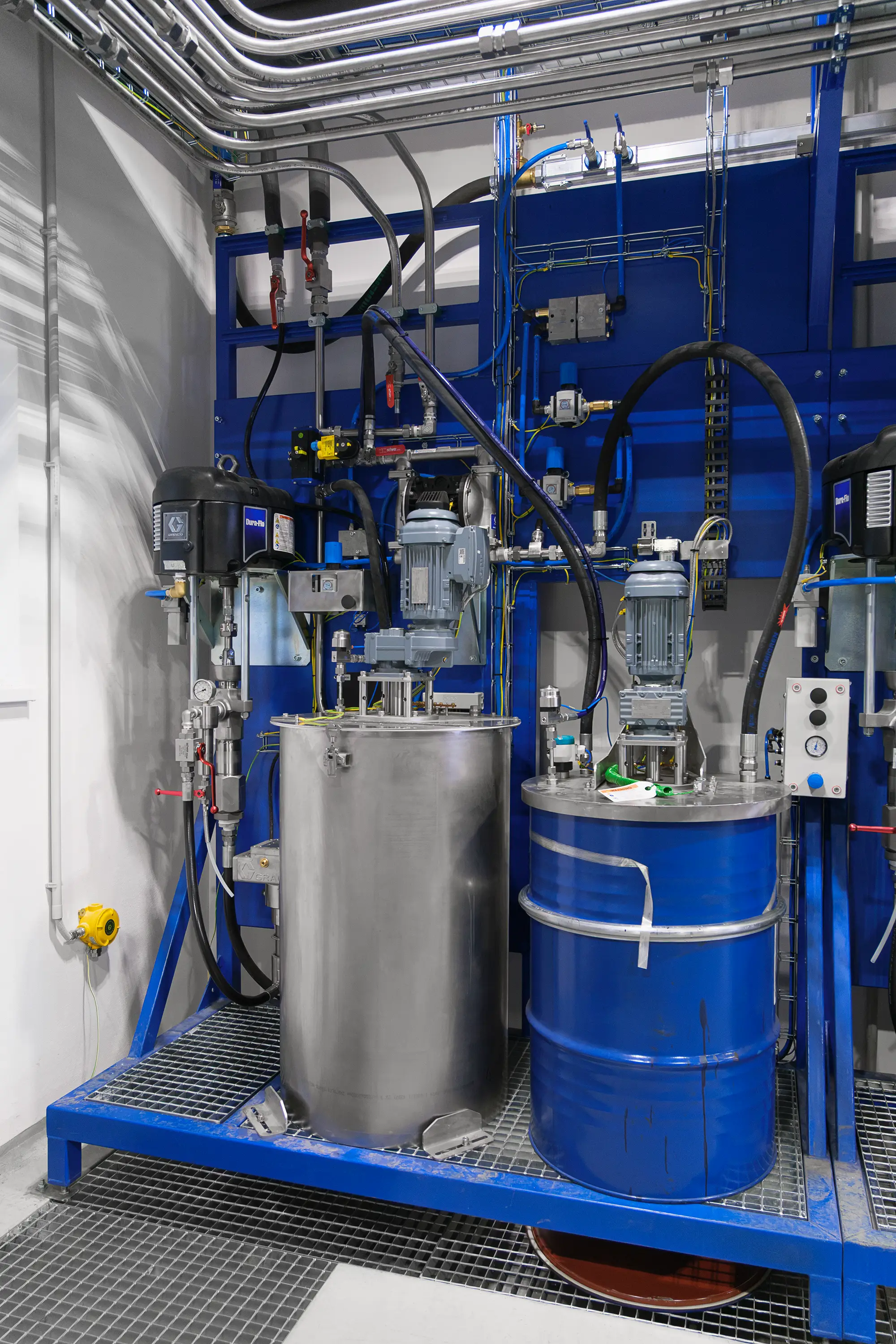
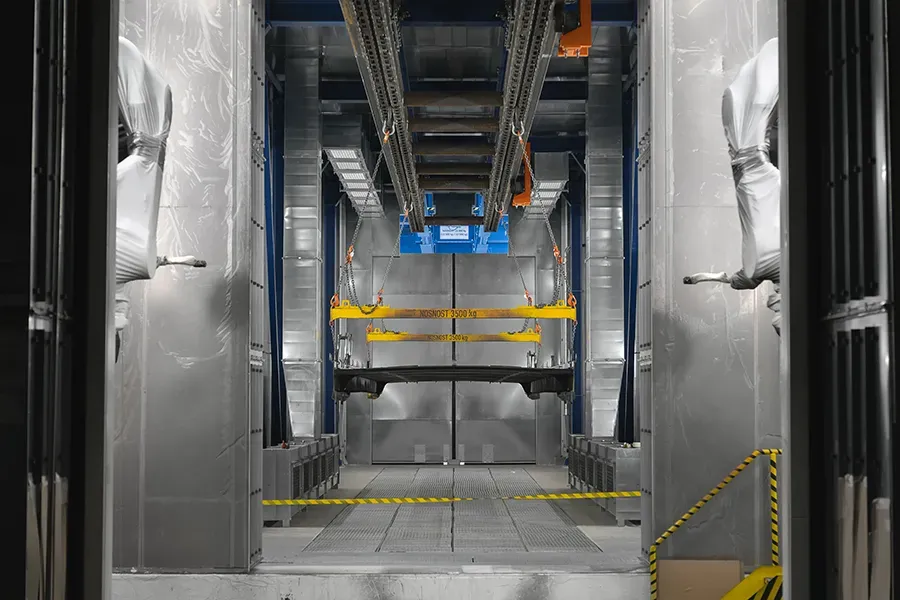
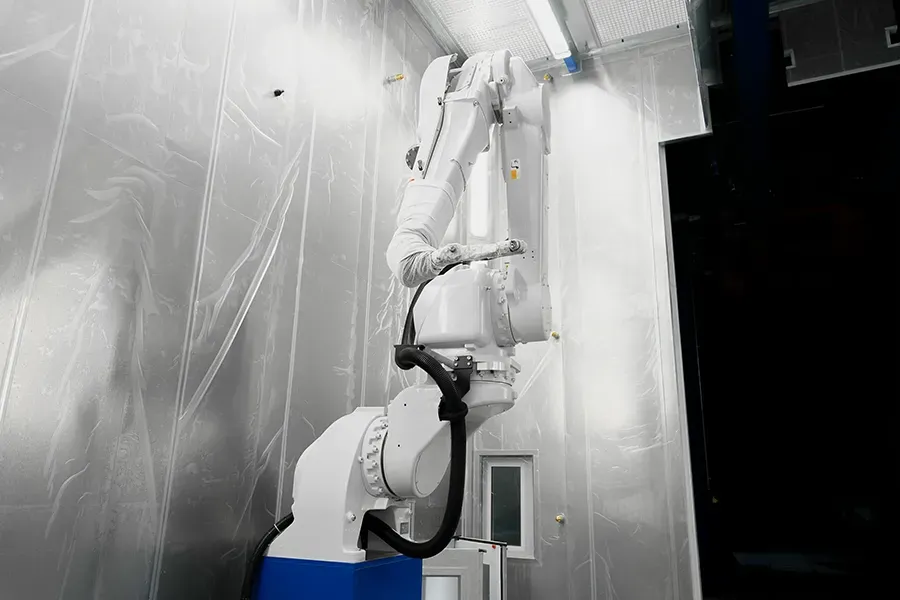
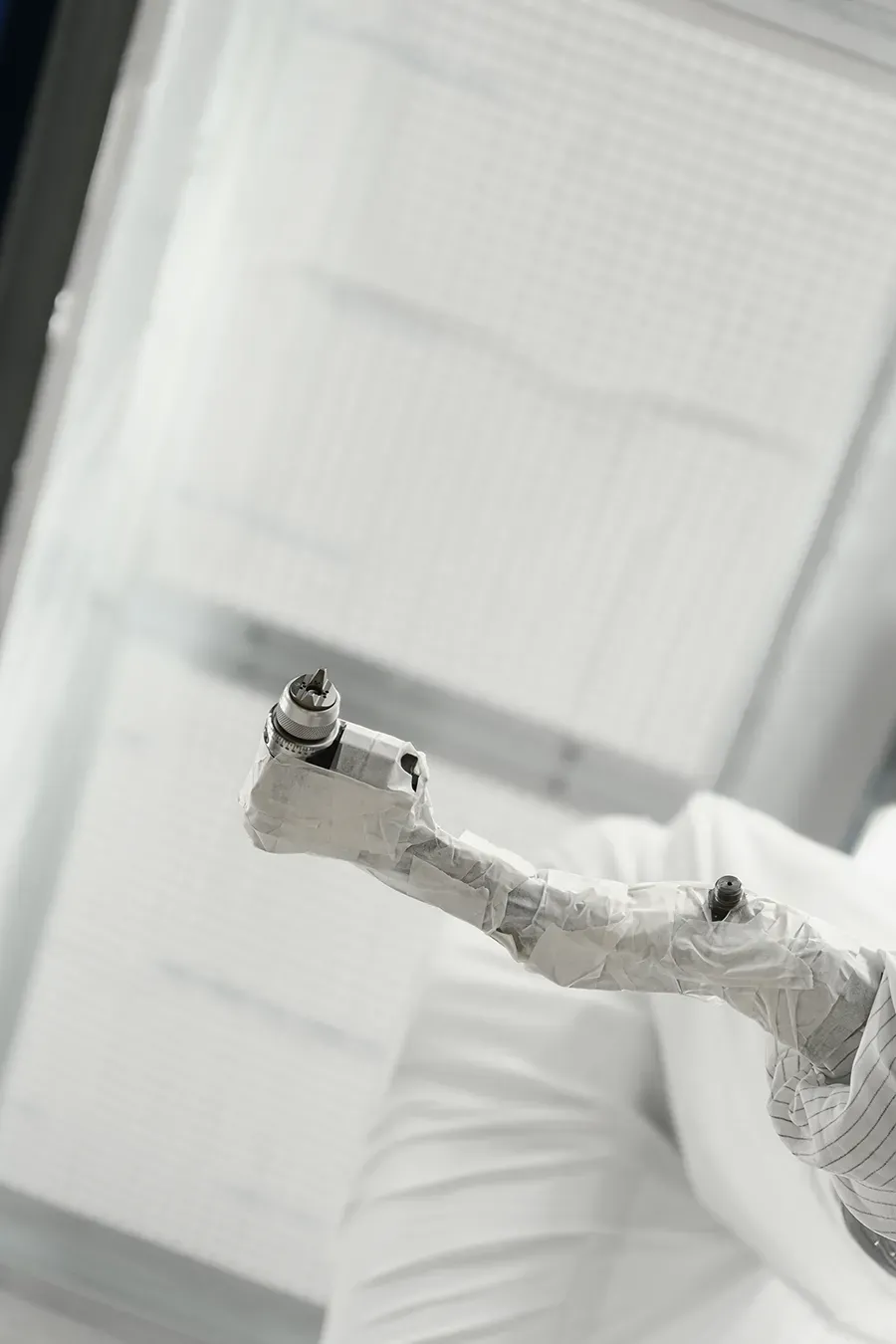
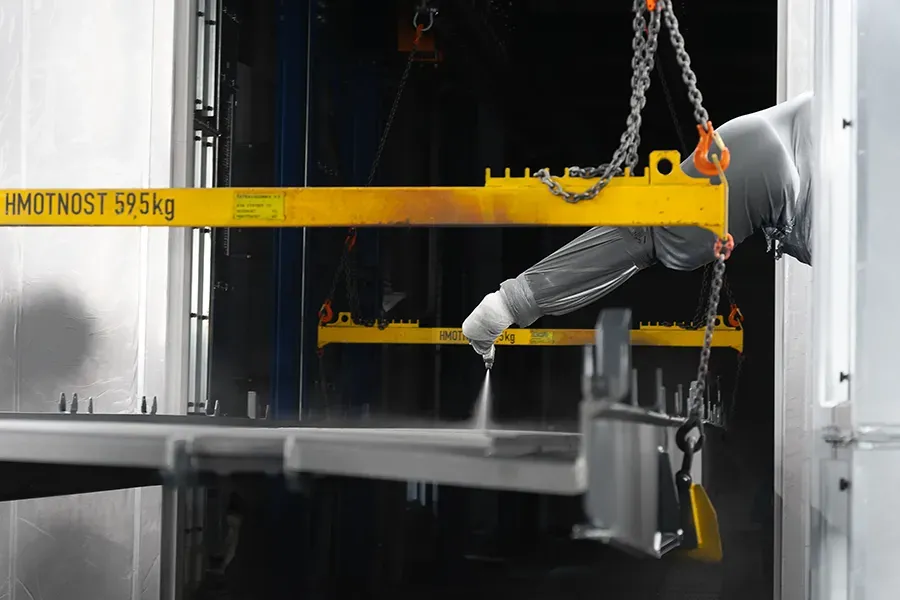
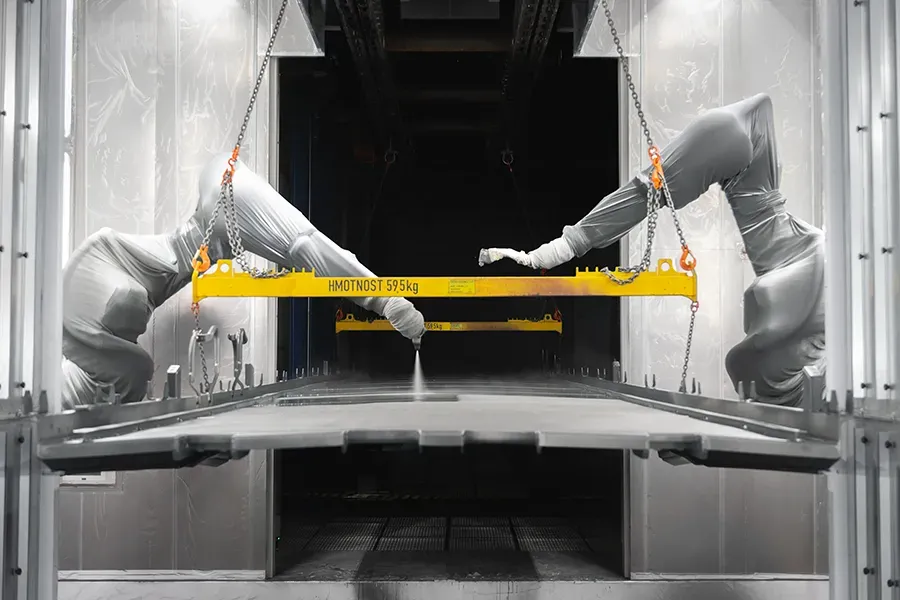
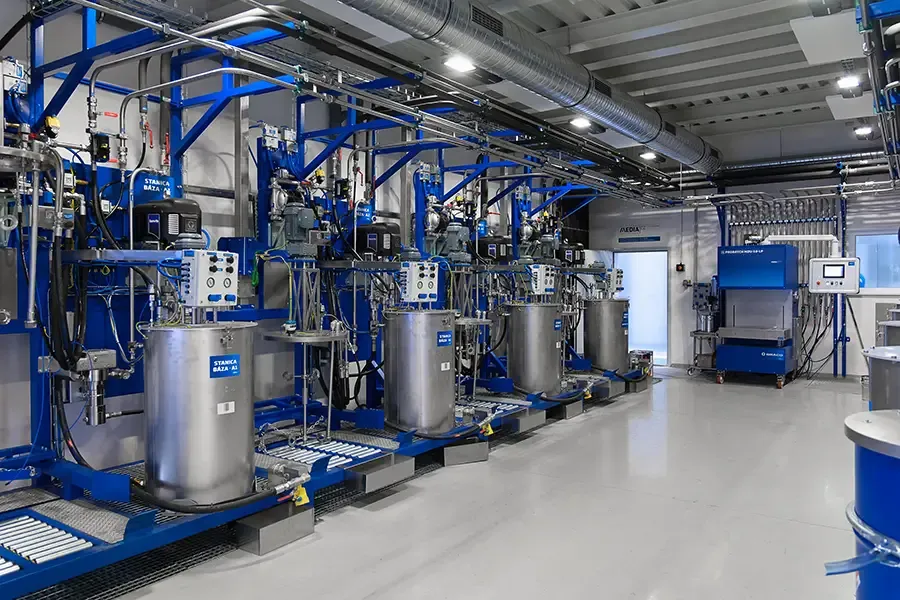
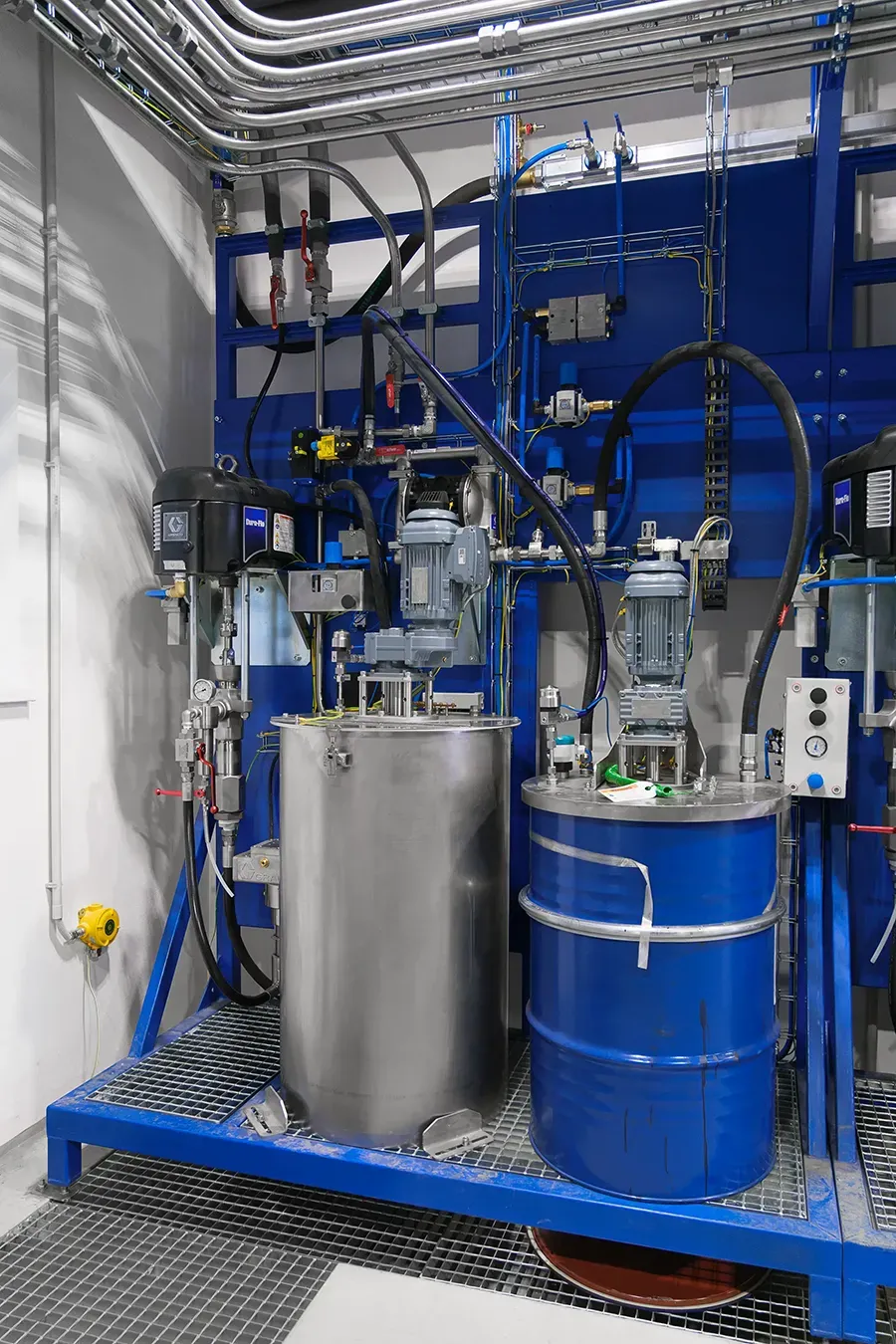
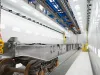
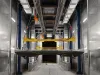
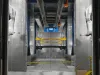
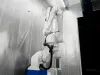
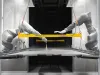
To make the coating line capable of handling parts as complex as freight wagons, we put two seven-axis robots into operation. These are equipped with high-pressure application technology that lays down a paint layer of 175 to 250 micrometres. Combining the robots' wide working reach with high-pressure application, the line can fully coat an entire part in a single cycle. The line also features reservoirs for eight shades and automatic liquid coating changeover, allowing the specified colours to be switched without manual intervention, even in series production. Compared to manual coating, the new line can therefore coat up to twice as many parts in the same time.
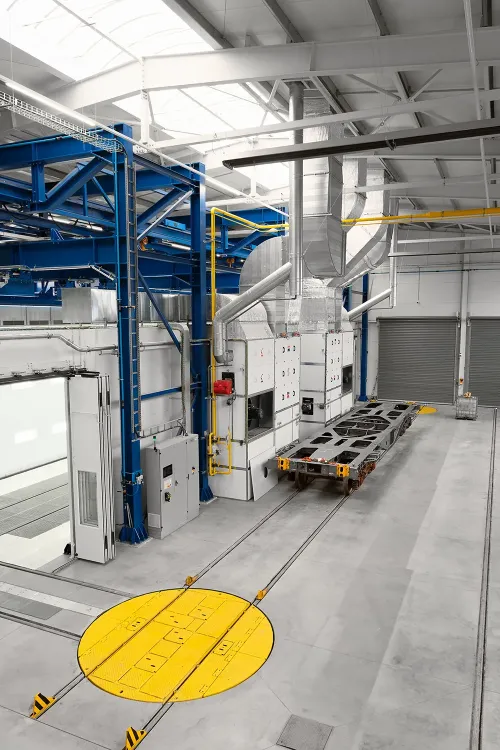
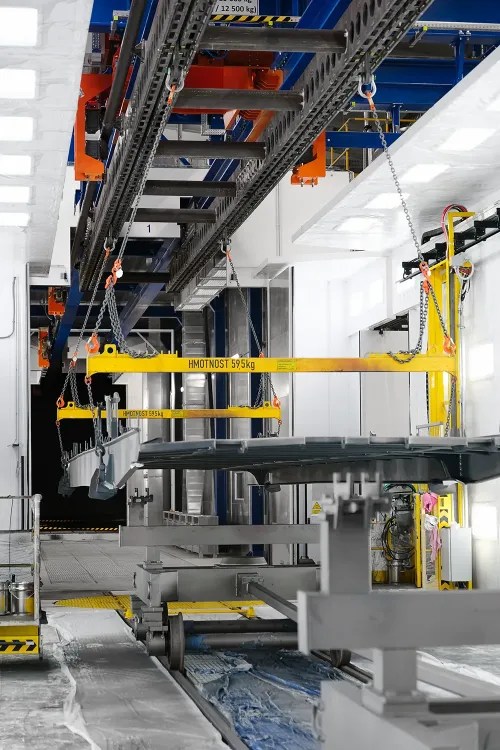
Efficient coating of oversized parts up to 25 metres long
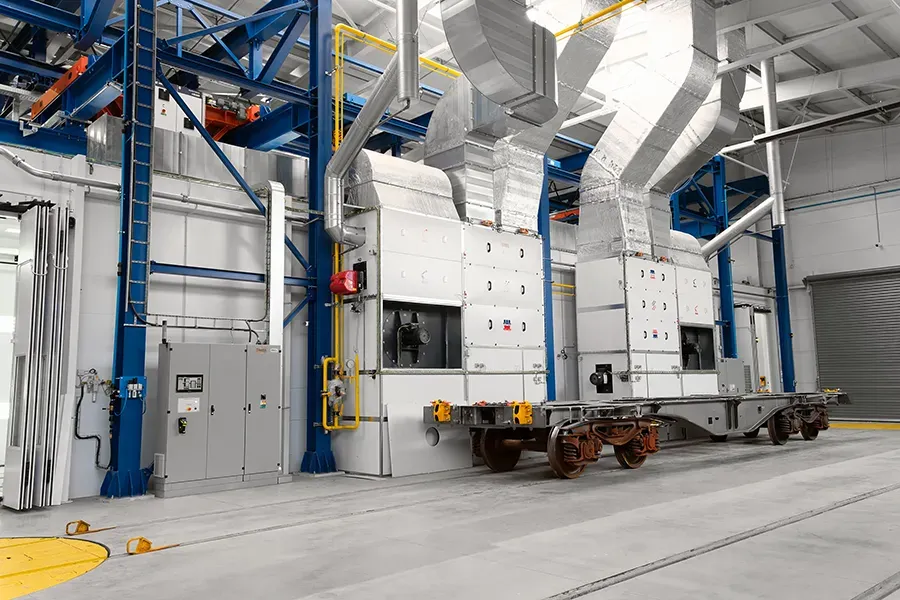
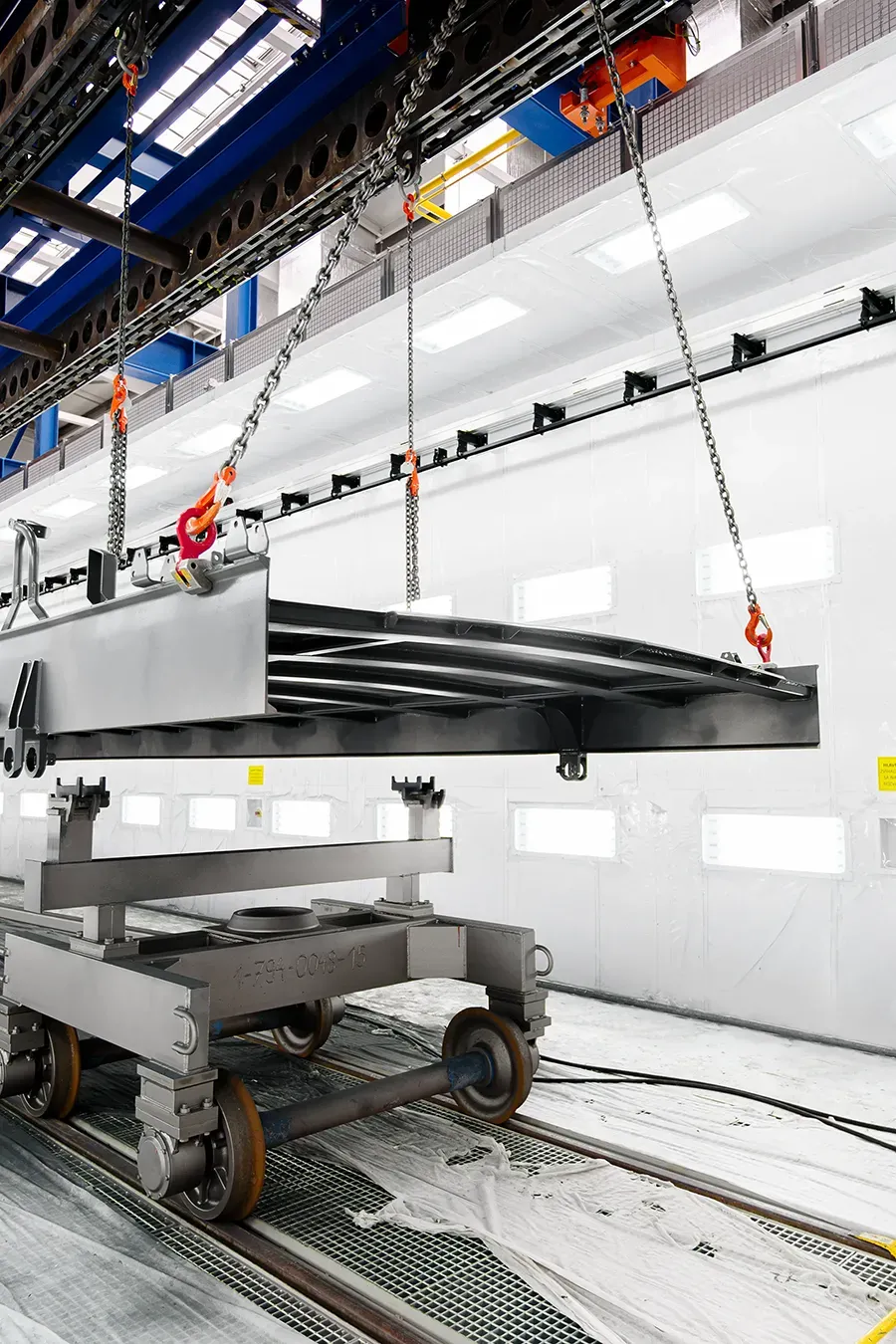
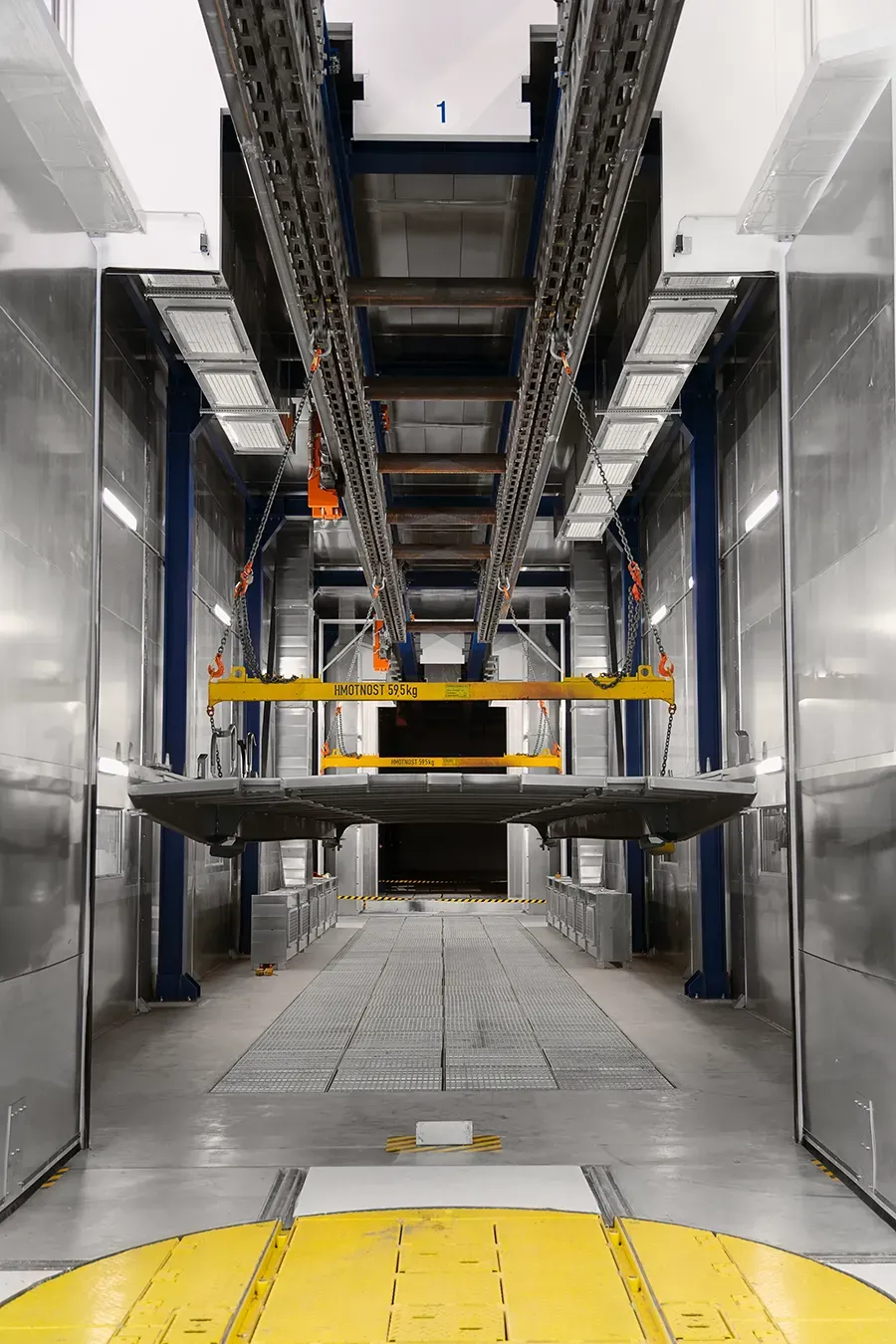
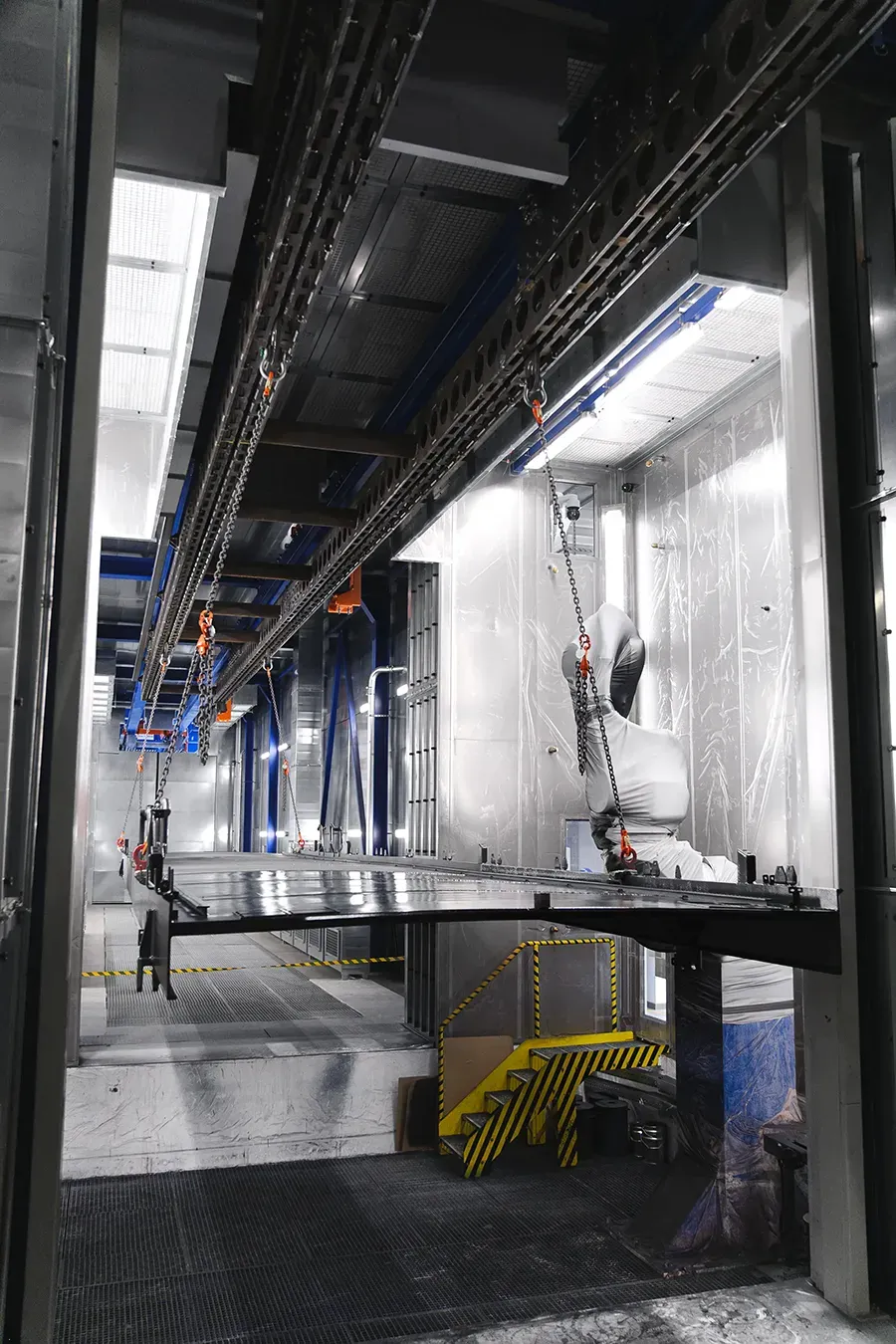
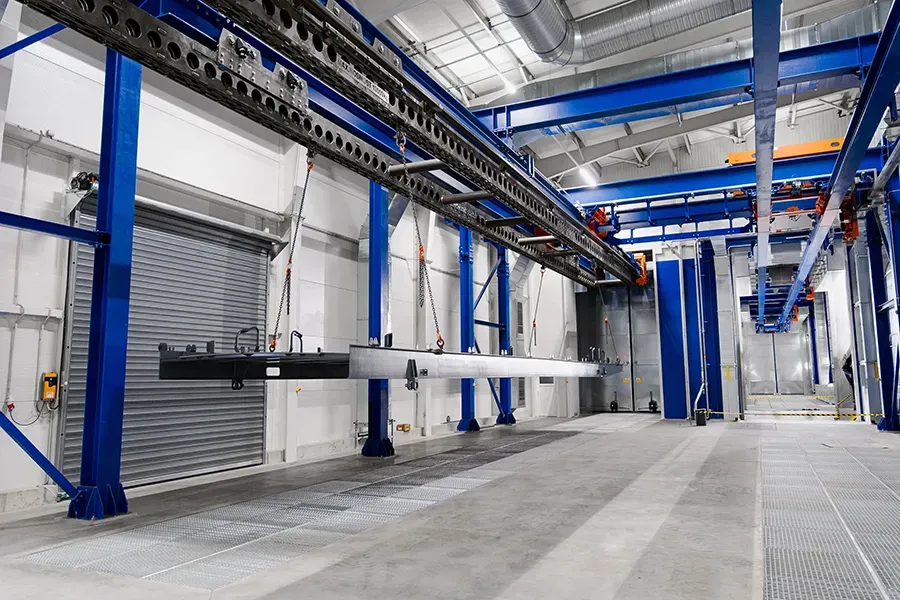
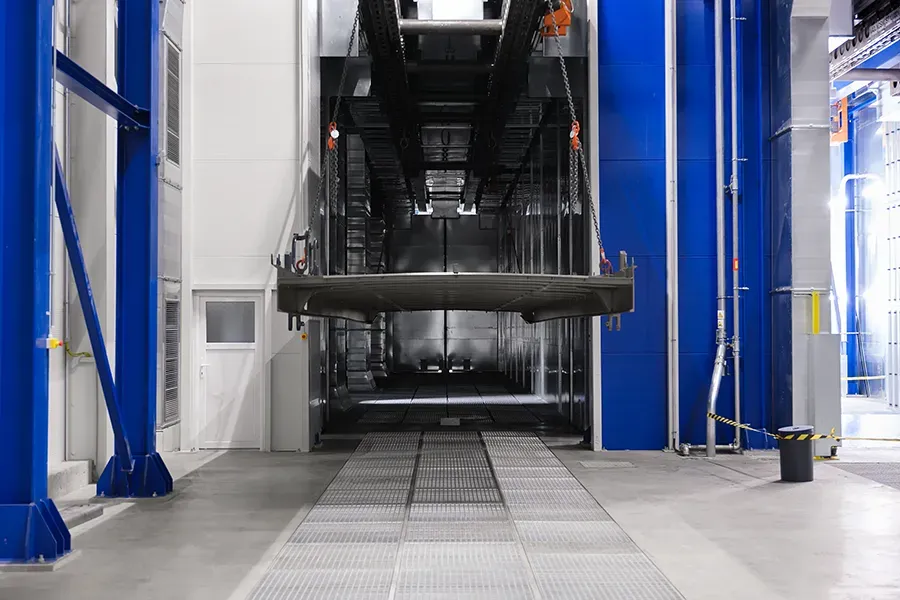
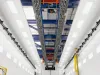
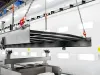
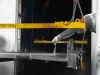
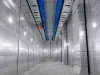
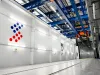
Whole freight wagons pass through the automatic line on an overhead conveyor, which moves each part, weighing up to 13 tonnes, into every station. Synchronising the robots with the conveyor allows the line to work in Stop & Go mode as well as to coat while the product moves continuously. The robots coat from a stationary position, which makes it possible to achieve maximum application quality. The conveyor can be divided into as many as 10 sections, so the automatic robotic line can coat several different parts at once. Its reverse travel also enables wet-on-wet application without unhooking the product between individual layers.
Digital control, monitoring, and coating process programming
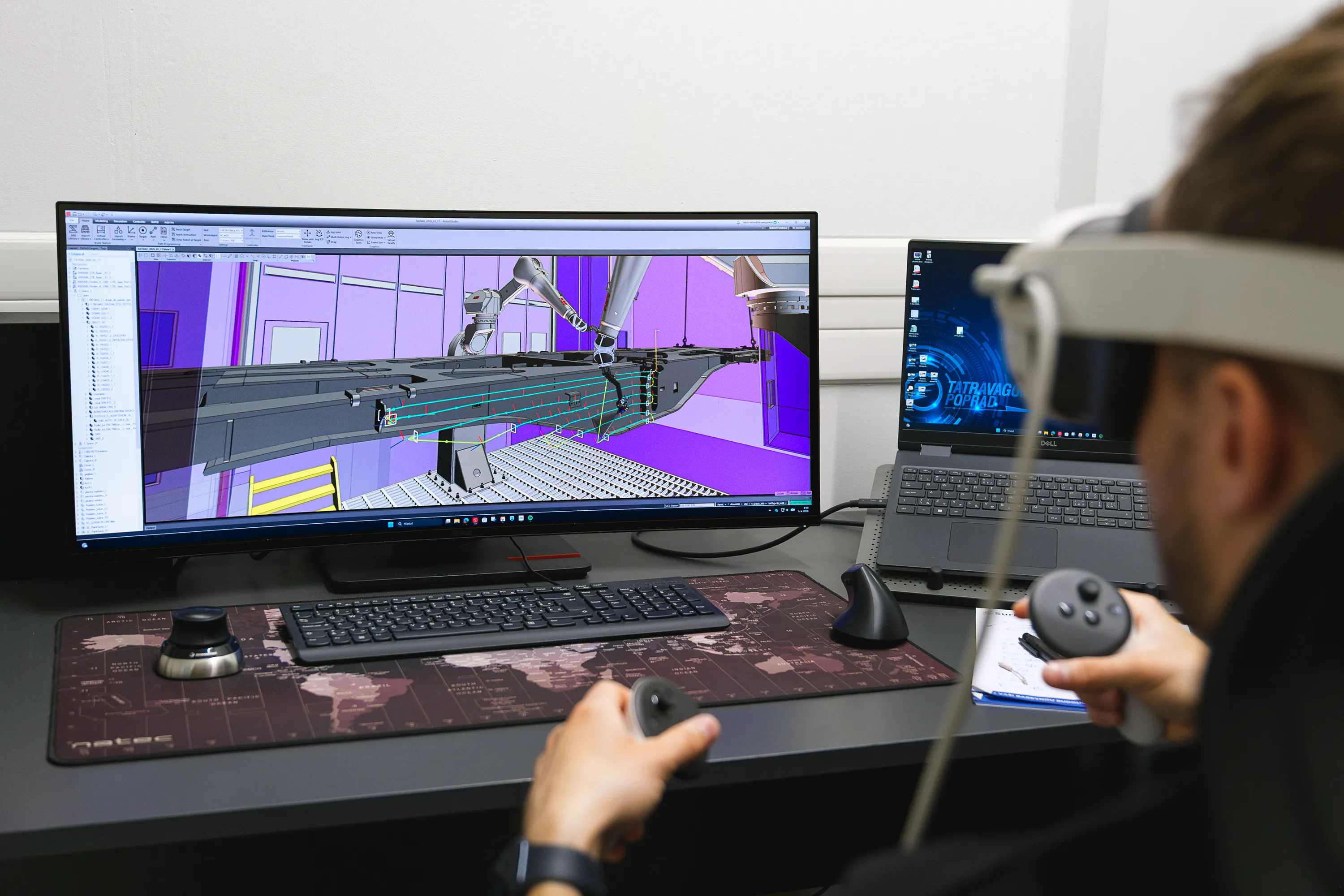
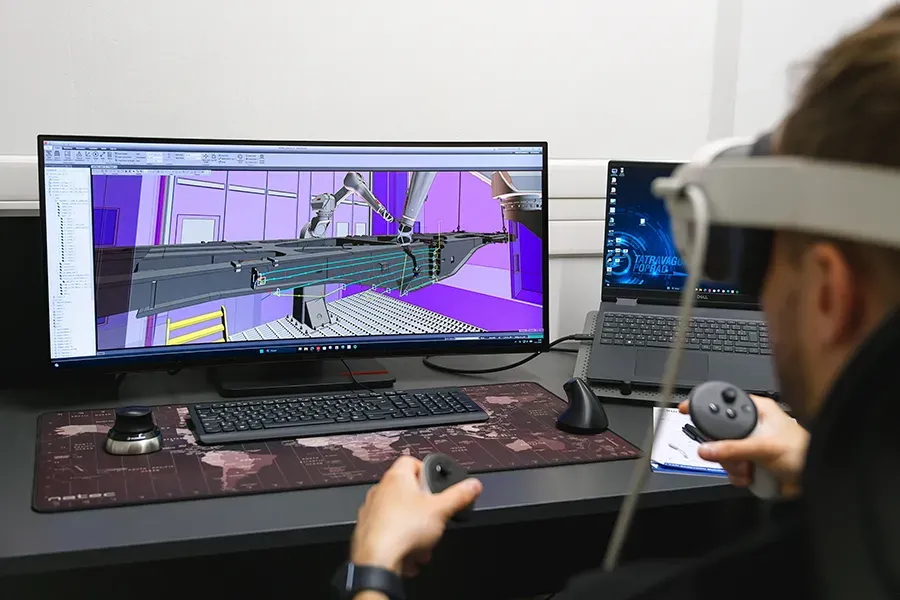
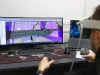
The barcode of each part holds the complete process recipe. By scanning the code, the system automatically selects the paint and assigns the coating program and process times. Robotic trajectories are prepared on a virtual copy of the line, so operators see the program run and test it immediately. All process data is stored in the ESCO control system and the SAP production system — including the paint batches, programs, and process times used — giving the customer a traceable production history.
Heat recovery and air recirculation for more economical operation
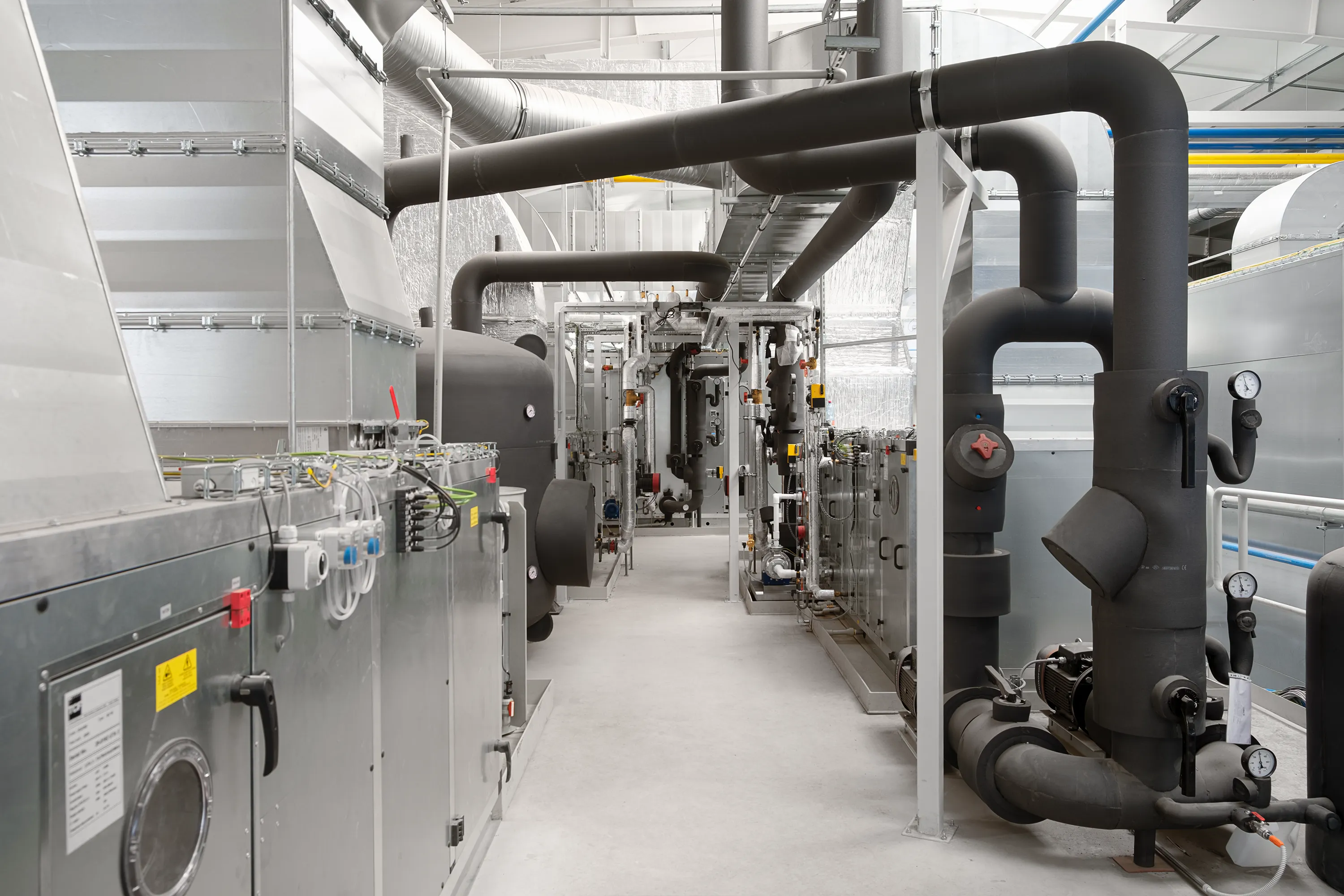
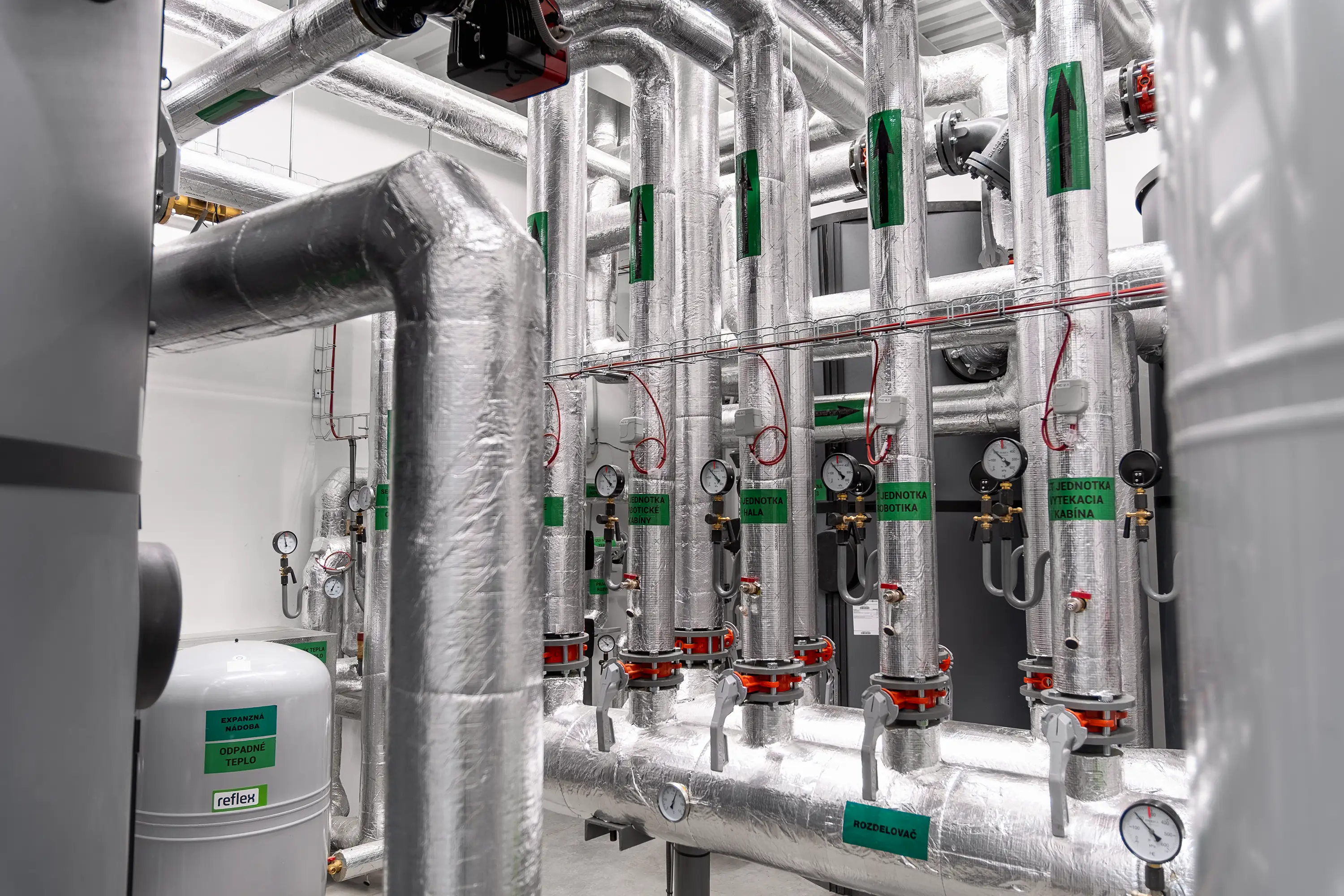
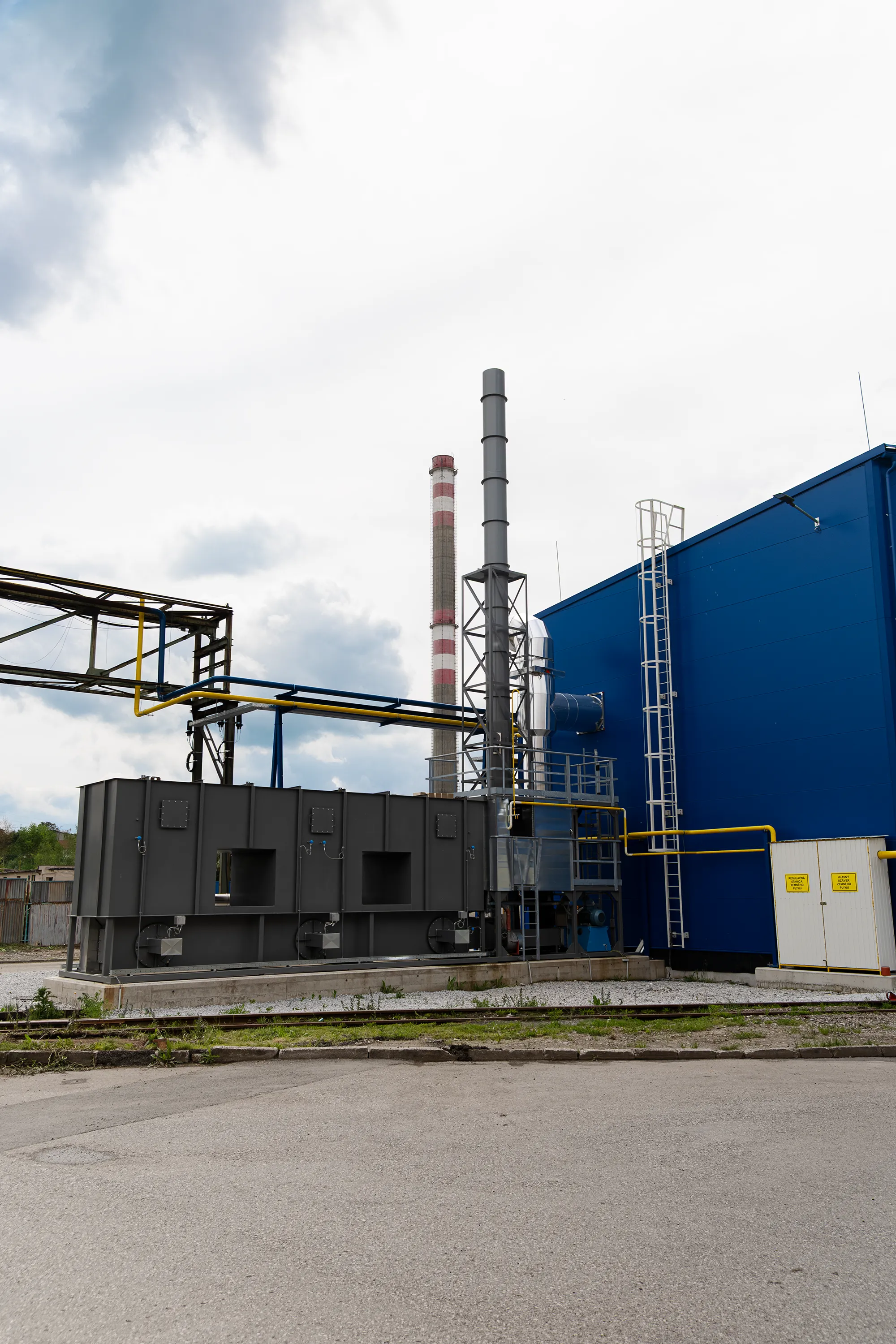
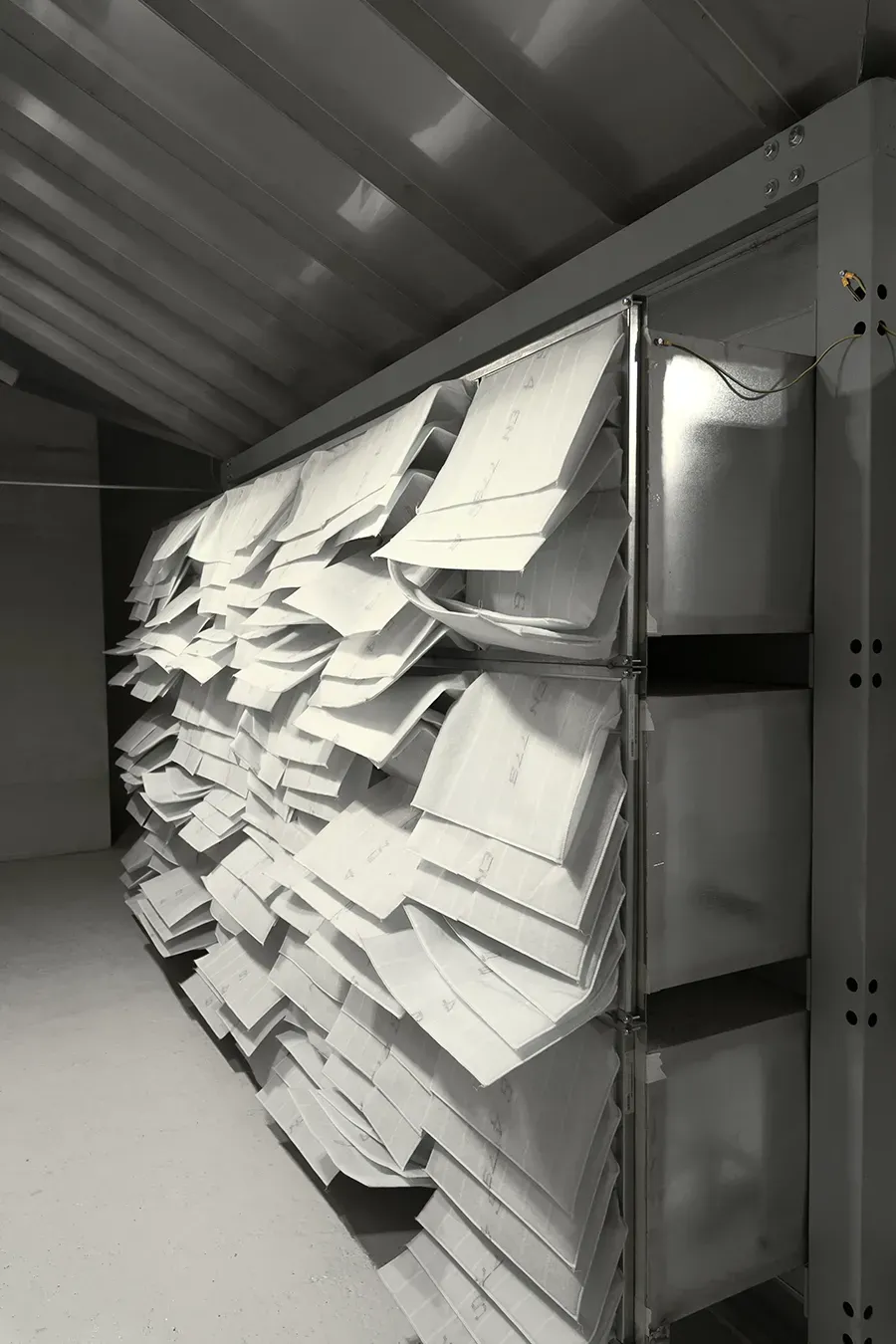
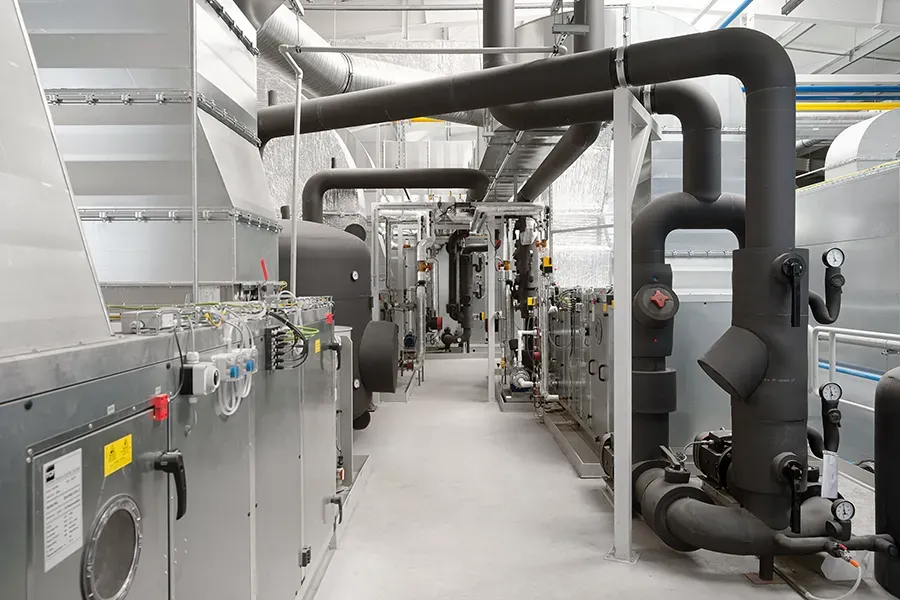
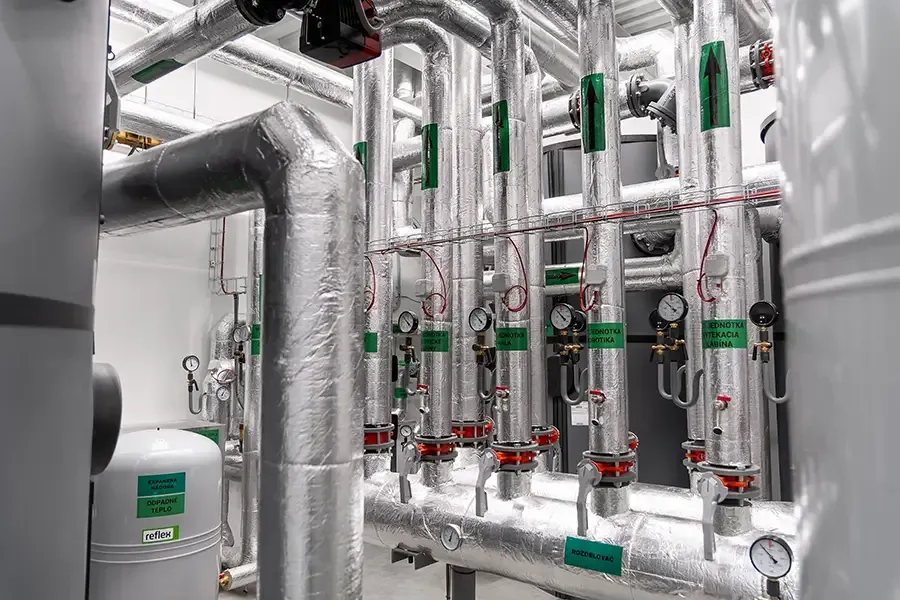
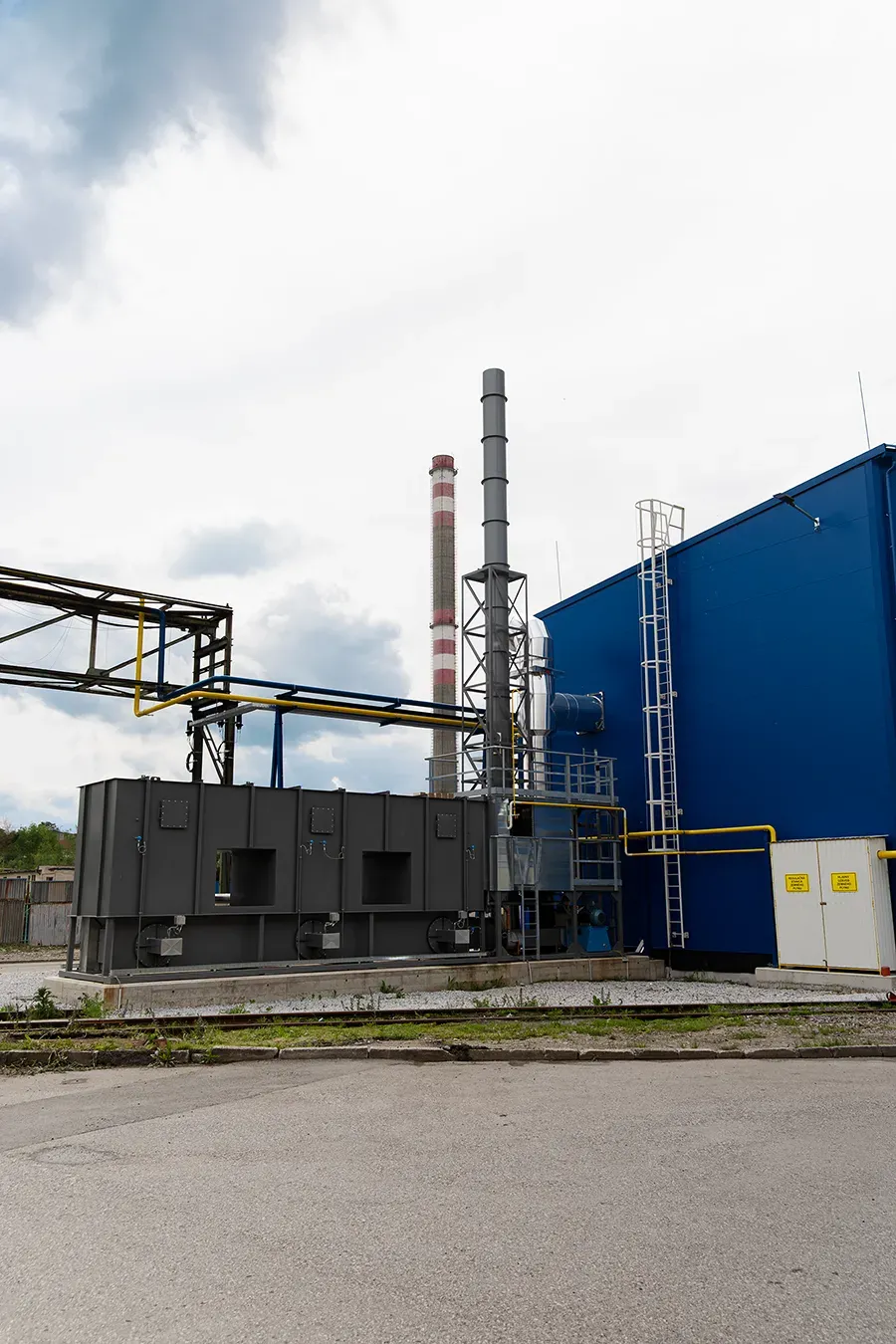
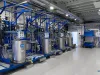
Our solution didn't focus only on speeding up the process or reducing consumption — we addressed savings in the technology itself as well. By using roughly 70% of the waste heat to warm the individual parts of the line and recirculating up to 90% of the air in the coating booth, the technology reduces the line's energy load. Exhaust air containing volatile organic compounds (VOCs) is cleaned in a thermal oxidiser and released back into the atmosphere. Tatravagónka thus gained a faster, more economical, and more environmentally friendly process for coating whole wagons, bogies, and smaller parts.